Showing posts with label Eric Gurna. Show all posts

Monday, February 12, 2024

Voices from the Field: Hiring Older Youth Workers in Afterschool

Source: Experience Corps

By Sam Piha

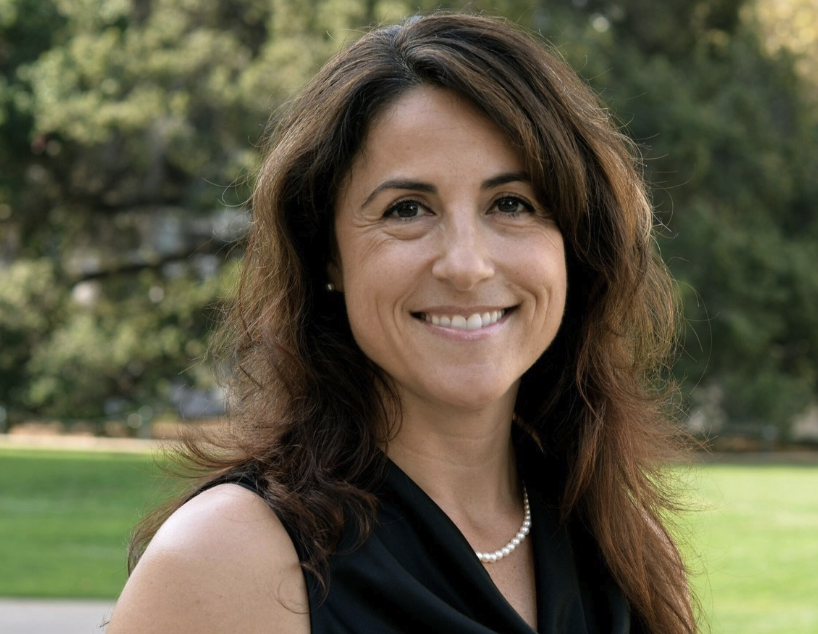
Eric Gurna is the former president and CEO of LA’s BEST and he has some experience with hiring older youth workers in afterschool programs. To learn more about this, we asked him a few questions and his responses are below.

Q: Do you think hiring older adults to work with youth is a good match?

A: I do think hiring older adults to work with youth is a good match - it's mutually beneficial for youth participants, young adult staff and older adults. We don't create enough opportunities in our culture for intergenerational exchange outside family settings. Historically we had these opportunities for older and younger people to interact in mutually enriching ways but in our current modern American society this is lacking, and bringing older adults in to work with youth in informal educational settings is a way to do that. Older adults bring a range of experiences that they can share with the mostly young adult staff of afterschool programs as well as youth. In practical terms it is also a good fit - the youth program workforce is largely part-time, and many older adults are looking for that kind of arrangement. 

Q: Generational diversity (older workers)- What are the benefits to the workplace, workers, and youth?

A: Please see answer above! Intergenerational communication has the potential to build empathy and understanding on all sides.  

Q: What are the potential challenges?

A: Because many young adults have not had the opportunity to interact with many older adults outside their own family, some may feel a bit close-minded to learning from and working with older adults. Likewise, some older adults can bring a sort of "I know best," condescending approaching to younger staff. I think these challenges are relatively minor, and can be mostly avoided with a strong staff orientation and ongoing professional development process, so that all staff learn and grow together.

Source: AARP Experience Corps

Q: How should an organization prepare itself to incorporate older workers?

A: I’m not really sure of the specifics here, but I think the first step is to learn from other organizations who have made intentional efforts to incorporate older workers already. Understanding the needs and concerns that older adults have about coming into a youth program workplace is important, so asking them about that would be a good start as well. 

Q: Any resources that you would recommend?

A: When I was CEO of LA's BEST Afterschool Enrichment Program, we had a thriving partnership with AARP Experience Corps - they have developed amazing partnerships with youth programs across the country and have a wealth of experience to learn from.  

Q: Would you offer any tips for program leaders?

A: Besides what I have already mentioned, I would encourage program leaders to stay open minded and enthusiastic about the idea of bringing older adults into their workforce - that positive attitude will go a long way. 

MORE ABOUT…

Eric Gurna
Eric Gurna is an experienced nonprofit executive and consultant committed to supporting the work of organizations dedicated to community & youth development and social justice. From 2015 to 2021, Eric served as President & CEO of LA's BEST Afterschool Enrichment Program, a partnership of the City of Los Angeles, the Los Angeles Unified School District and the private sector serving 25,000 children at nearly 200 Los Angeles elementary schools. Eric joined LA’s BEST as the second President & CEO in the organization’s history. During his tenure, LA's BEST helped to lead a statewide advocacy movement that led to close to $200M in increased funding for expanded learning programs, secured the largest private donation in organizational history ($2M), spearheaded an initiative for LA's BEST to become the first large-scale trauma-informed expanded learning system in the nation and completely revamped the organization's visual branding and messaging.

Eric brings a deep commitment to positive youth development to his work, and a national reputation for thought leadership in the Expanded Learning movement. He also brings a nuanced understanding and appreciation for how children learn and develop, and a passion for staff and program development.

UPCOMING WEBINAR:


To learn more and register, click here.


Tuesday, July 19, 2022

A Shout Out to PCY Founder, Jennifer Peck


By Sam Piha

“After 21 years of incredible service, Jennifer Peck, Partnership for Children & Youth (PCY) founding CEO, will step down from her leadership role in the organization on June 30th. Jennifer will assume the role of Senior Advisor during the transition to support the organization and its new leadership.” 
- Partnership for Children & Youth

I've had the pleasure of working with Jennifer on promoting access to quality afterschool programs for over 20 years. She has partnered with Temescal Associates on several projects throughout the years and has proved to be an incredible leader and innovator. I interviewed Jennifer recently about her career and accomplishments and we will share her responses in a future blog post. Below we hear from afterschool leaders who share their thoughts on Jennifer's impact on the field of afterschool. 


Michael Funk
The creation of a new Division at CDE in 2011 can be entirely credited to Jennifer. The After School Division was created then under the newly elected SSPI Tom Torlakson and Jennifer co-led his Transition Team. I would have never considered serving as the Director of this new division if Jennifer had not twisted both of my arms off to do so! (Thank you, Jennifer.) I have now been in this position for over 10 years and Jennifer (and countless others, have been with me for every step of this amazing journey.) California's communities, schools, families and students owe an incalculable debt of gratitude to Jennifer Peck. Her vision, leadership and tenacity are "hall-of-fame" caliber.” – Michael Funk, Director, Expanded Learning Division, California Department of Education

Jodi Grant
“Jennifer Peck did remarkable work to create, build and strengthen the federal 21st Century Community Learning Centers initiative, which is today a major success that has improved the lives of millions of children and families. After leaving Washington, D.C., Jennifer remained a passionate advocate, working at the local, state and national levels to create after school and summer learning opportunities for students across the country. She had a powerful, holistic vision for out-of-school-time programs that engaged not only with schools, but also with local community organizations. It was a privilege to work with Jennifer for almost two decades. The entire afterschool community will miss her, and her legacy will carry on.” - Jodi Grant, Executive Director, Afterschool Alliance

Eric Gurna
“Jennifer is an amazing leader for our field, and an inspiring colleague for so many of us. I learn so much from working with her. I don't think it is an exaggeration to say that without Jennifer's leadership and vision, the field of expanded learning in California would not have the depth, quality and scale that we see today - that means that she has had a profound impact on so, so many children and families and an entire workforce. And she made that long-term impact with a joyful spirit and great humor! Jennifer you will forever have our gratitude and appreciation.” - Eric Gurna, former Director of LA’s BEST

Margaret Brodkin
“Jennifer understood the combined importance of practice, policy and politics. She created an organization that excelled at all three, and each enhanced the other.  Her leadership particularly lifted the quality, visibility and progressive policies in youth development, summer learning, afterschool and community schools. She has been one of the most influential people in California’s children and youth arena. Her legacy is alive and well at the organization she founded.”Margaret Brodkin, Nationally recognized children’s advocate and policy pioneer

Rebecca Goldberg
“Jennifer Peck has left an indelible mark on the California education landscape. Because of her perseverance, foresight, strategy, and leadership, California continues to lead the nation in its investments in kids and serves as a model for all other states that aspire to dedicate significant, ongoing funding for expanded learning and summer learning opportunities. While she will be missed in her role at PCY, I know she will continue to advocate for kids in new and great ways. With California poised to once again realize the largest expansion of publicly funded expanded learning programs in the country, Jennifer should feel nothing but pride in all that she has done to help get the field to where it is to be ready for this type of unprecedented expansion. Thank you, Jennifer!”
– Rebecca Goldberg, Non-profit & philanthropy consultant; Board Member at Forum for Youth Investment, MENTOR California, and Playworks Northern California

Aaron Dworkin
Thank you, Jennifer, for your partnership, leadership and tireless efforts on behalf of young people, families and communities across California and the country. You set a high bar for what is possible, and our field and leaders and partner programs are all stronger for your efforts, passion and wisdom. I personally thank you for helping me grow and learn over so many years. You will be missed but your organization will continue on your legacy.” – Aaron Dworkin, CEO, National Summer Learning Association

Brian Lee
“Jennifer has been an impactful leader in the after school and summer field. With her vision and dedication, she has helped transform California into the national leader on after school and summer, through both her (and her stellar staff’s) close collaboration with California policymakers and her empowerment of voices from the field.”Brian Lee, Policy Advocate previously with Fight Crime: Invest in Kids California


"Millions of professionals and volunteers work with young people every day in the many settings where youth play, learn, and grow outside of the school day. Yet, we have little collective information about this essential workforce. You can help change this!"- California Afterschool Network

Take the survey today, click here.

Wednesday, February 7, 2018

The Future of Afterschool

By Sam Piha

As we look forward, we asked several national afterschool leaders to share their thoughts on the future of afterschool. Below are some of their responses.


Photo Credit: NHP Foundation
Q: When considering the future of the afterschool movement, what challenge do you see ahead and how should afterschool stakeholders respond to this challenge? 

Pedro Noguera,
UCLA 

Pedro Noguera: The primary challenge facing those who recognize the importance of after school learning is to make sure that what we offer to children is consistently of high quality. If we want to have an impact on academic and developmental outcomes, quality will be essential.


Dale Blyth,
University of MN

Dale Blyth: In my view, the future holds two major challenges for our field -- how to resource it and how to build the capacity and expertise of the work force. The first will require us to more directly meet the challenge of getting and better using data on outcomes, especially social-emotional outcomes, to both improve what we do and to make the case for resources to do it well. The second requires us to challenge each other, to expect more of ourselves and our staff with respect to quality process and intentional practices that move beyond activity management.  


Eric Gurna,
LA's BEST
Eric Gurna: I think our biggest challenge is always to help people to see the critical value of what we do. One way to respond to that is by investing in quality evaluation, so we can show the evidence of tangible outcomes. But equally important is that we engage others to tell our story. It's not enough that leaders in the field are vocal about the importance of the after school movement - we need prominent elected officials, business and civic leaders, artists, athletes and celebrities to speak up as well. 

Another challenge we face in California is the silos we work in, usually based on funding streams. If we can reach across these arbitrary boundaries and build solidarity with everyone who cares about our most vulnerable kids and families, we can raise the profile of the work and create more integrated support systems. I believe we need to collaborate more closely with other closely related fields - early childhood education, juvenile justice, child welfare, etc., so we can go beyond competing for funds and attention and build a movement to create a more child-centered culture.


Chris Smith,
Boston After School & Beyond

Chris Smith: Stakeholders should see change as an opportunity to refresh its appeal and reveal a sector that is both unified in its values and equipped with convincing evidence that a diverse approach to helping young people is also a resilient, adaptable, and scalable one.

Q: As afterschool programs evolve, what do you think are important topics or program innovations that we should be thinking about in the future? 

Dale Blyth: From my perspective, the programs that will grow and succeed in the future are those that have intentional social-emotional learning processes and outcomes they work toward and the types of people who can live them as well as excite youth in topical content areas. These programs may or may not have specific content areas such as the arts or STEM but they will definitely have deliberate ways they work with youth to develop a range of competencies. Content may be king in schools but it should only be a vehicle for good youth development - not the destination.


Eric Gurna: Honestly I think that innovation is overrated. We have so many tried and true practices and programs that are woefully under-resourced. While precious resources are focused on the next new thing, the next pilot project that will likely never achieve scale, we limp along trying to sustain evidence-based practices that have big impact when executed with quality. That said, we are embracing trauma-informed practice, and are engaging in new collaborations to enable LA's BEST to improve and expand how we cultivate emotional health and overall wellness for all our communities. That's exciting and important work, as relevant as it could be in today's social and political climate.

Chris Smith: We should consider the skills that are at the intersection of education, youth development, and college and career readiness. We will find that we share priorities with those outside of the afterschool sector. Taking a step back to consider the long-term outcomes of our work will prompt us to be creative in organizing where, when, and with whom young people are learning. It will open up new alliances and require us to examine how well we are doing and what we need to do to get even better.   


-------------------
Pedro Noguera, PhD 
is Distinguished Professor of Education
 at the UCLA Graduate School of Education & Information Studies

Dale Blyth, Ph.D. is Extension Professor Emeritus and Sr. Research Fellow, Center for Applied Research & Educational Improvement College of Education and Human Development at the University of Minnesota.

Eric Gurna is President & CEO of LA's BEST After School Enrichment Program.

Chris Smith is Executive Director of Boston After School & Beyond.


Thursday, February 26, 2015

Let's Welcome Back Eric Gurna, LA's BEST New President & CEO

By Sam Piha


Sam Piha
Eric Gurna returns to LA's BEST and his old stomping ground to serve as President & CEO of LA's BEST, one of the largest and most influential afterschool initiatives in the country. LA's BEST was founded by Carla Sanger, who was a strong leader in California and across the country, helping to propel the afterschool movement.

Eric has been a long-time friend and colleague and we are excited to have him back on the West Coast. Below, we asked Eric a few questions about his transition to LA's BEST. You can learn more about Eric by clicking here.

Eric Gurna
President & CEO
LA's BEST
Q: Welcome back to California. Can you say a little bit about your roots in California and with LA’s BEST
A: Thank you! I definitely consider myself a California boy. While I was born in New York and have lived on the East Coast for many years, I moved to Oakland, CA when I was nine years old, and graduated from public high school and university here. My family still lives in the Bay Area, so even when I’ve been living in the East I’ve always been out West on a regular basis. 

I moved to Los Angeles shortly after finishing graduate school in New York City, in 1998. I met with a few people in the youth development field and all of them mentioned LA’s BEST, so I knew I had to learn more. I joined the organization as Director of Staff Development and though I only worked in that position for a couple of years, I was lucky enough to be around for one of the first major organizational growth periods, and gained incredible experience being part of a team that was dedicated to increasing access and the scale of the program, while maintaining the spirit, culture and values that had made the program great to begin with. I continued working with the LA’s BEST team over the years from the outside, assisting with staff development, curriculum and other program resources.

Q: You created a very successful organization in New York, Development Without Limits, providing training and curriculum for afterschool programs. Can you say a little about why you left this to take over the reins at LA’s BEST? 
A: This was too huge of an honor, and opportunity, to pass up. I loved the work I was doing with the Development Without Limits (DWL) team, and am thrilled that the organization is in great hands and continues to thrive. Now I am so excited to get to work with the LA’s BEST team and all its partners, and the chance to lead the organization through this transition, and into the future. 

For the past fifteen years with DWL, I have worked with dozens of youth organizations and programs across the country in all kinds of settings, so I also see this new role as a chance to incorporate some of the innovative practices I’ve seen into LA’s BEST. Really what I’m most excited about, and what made me feel it was worth it to uproot my family and move across the country, is the LA’s BEST team – it is in amazing group of people who put young people and community at the center of everything they do.

Q: You are stepping into some large shoes. I am referring to the shoes of Carla Sanger. Can you say something about her influence on the field? 
Carla Sanger
Founder & Former CEO
LA's BEST
A: Throughout this transition, it is amazing how many times people mention Carla’s shoes! Carla’s influence on the field is tremendous - she has been a key part of the driving force that has created statewide and local afterschool infrastructure and resources in California that just don’t exist (yet!) in other states. 

She’s been a force nationally as well – bringing the fresh air of honest dialogue, humility and inspiration to every conversation and collaboration she is a part of. But I think her biggest influence is on the many individuals she has worked with – she’s shown that you can be courageous and outspoken without having a large ego, that you can be sensitive enough to care deeply about how young people feel, but fierce enough to fight the good fight when you have to. For me personally, she has been my most important mentor, and someone I admire endlessly. To my good fortune, I still have her number, and I plan to use it as needed!

Q: What do you see as the next step for LA’s BEST? 
A: I don’t know yet! I only just started in this role February 17, and I don’t come into this with a preconceived notion of what changes are needed, or next steps. I need to learn a lot more about how things work – and maybe what isn’t working so well internally and in the field, before I can have that sort of plan. I do know that I want us always to be striving to create even warmer environments for kids, to listen closer to young people and to each other, and to be more creative in how we do so much with relatively little. In terms of the field, I’d love for LA’s BEST to connect with other afterschool programs more, to collaborate and build us all stronger.

Q: Could you comment on the LIAS learning principles?
A: I’ve been a fan of the LIAS learning principles from the beginning. I think they are a clear and succinct articulation of the values of most out of school time programs, and I think providing that language is very helpful as youth professionals interact with all the important stakeholders, and need to express what we are about and what we do. 
_________________________
Eric Gurna joined LA’s BEST as CEO and President in February 2015. LA’s BEST Afterschool Enrichment Program, is a partnership between the City of Los Angeles, the Los Angeles Unified School District and the private sector that operates in 195 schools. 

Previous to his arrival, Eric founded DWL in 2000 with the vision of supporting youth programs and schools to improve the quality of their work and create more youth-centered environments. There, he hosted the podcast, Please Speak Freely: Honest Conversations About Youth Development and Education, during which he interviews leaders and practitioners to shed light on key issues and explore different perspectives. Before founding DWL, Eric served as Director of Staff Development for LA´s BEST. He cofounded the LA Partnership for After School Education. Eric also worked for Educators for Social Responsibility and Rheedlen Centers for Children and Families (now Harlem Children’s Zone).

Eric holds a B.A. in Political Science from the University of California at Irvine and an M.S. in Urban Policy Analysis and Management from the New School for Social Research. He lives in Los Angeles, CA with his wife Elia, who is an artist, their two children, Rosalie and Rafael, and their two cats.

A Book Drive for Children's Books Makes for a Fabulous Service- Learning Project

Source: The Children's Book Project  By Sam Piha   In our previous paper entitled, Reading Buddies: Promoting Literacy and Community Eng...