Wednesday, March 28, 2018

HEARTSET: Transforming Teaching & Learning

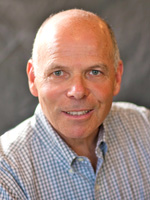
By Guest Blogger, Stu Semigran, President and Co-Founder of EduCare Foundation


Stu Semigran
Have you ever thought that the challenges that educators face today are different from any in modern time?  With political and social unrest creating a stressful environment, how can we best uplift ourselves and assist our young people deal with life and learning? 

Here’s an idea for you to consider: If we deeply intend to give the best to our students and teach them so they are prepared for going out into the world, what if the first ones to give to and teach is ourselves?  What if, in order to take care of others, we must first take care of ourselves? And in taking care of ourselves, we automatically promote and influence positive change around us.

This is not necessarily a new idea. I’m sure you’ve heard, "Let there be peace on earth and let it begin with me." How many people do you know whose email signature includes, “Be the change that you wish to see in the world.”?

But how do we take care of ourselves such that we and our young people benefit? I suggest that we develop a positive, Growth HEARTSET in ourselves so that we can support those we teach in developing theirs.


EduCare's Growth Heartset Professional Development

What is a HEARTSET? 
Most people are familiar with the idea of a mindset- a frame of mind that has a significant correlation to one’s motivation, effort, and approach to life’s challenges.

HEARTSET is a frame of heart. 

Have you ever walked into a room or a group, where listening to different points of view is the norm? Where mistakes are tolerated and understood as part of a learning process? Where support and encouragement is common among people? Where there's joy, acceptance, consideration, and kindness? Where love is felt and shared—it's in the air? It is these foundational elements of a Growth HEARTSET—that lay the nurturing soil from which the seeds of vibrant curriculum and impassioned teaching and learning sprout. 

A Growth HEARTSET is a kindness of heart. It establishes an energy field of self-awareness, non-judgment (acceptance), peace, caring, positivity, giving, forgiving, and compassion that allows us to more freely and proactively be a force of good. A Growth HEARTSET creates an emotional environment in which we and the young people we teach can flourish in spite of the uncertainties and challenges that are so prevalent today.


EduCare's ACE Program

Recently, after one of EduCare’s ACE (Achievement and Commitment to Excellence) students success programs that promote Growth HEARTSET, a high school principal shared, "Well, you've opened my students’ hearts and now we can capture their minds." He recognized that when the heart is “set” in a healthy and compassionate place, the mind is more open and prepared to learn.  


How do we create a Growth HEARTSET? 

We can set or reset the "heart" through self-awareness, a clear intention, and practicing habits of a Growth HEARTSET. There are many effective teaching approaches and ways to assist you in moving along that trajectory that will be the subject of subsequent blogs and articles. 

By creating a Growth HEARTSET—first in yourselves so it infuses your relationships and teaching—a greater “field” or culture of caring and loving can be known, felt, and shared. This Growth HEARTSET then serves as the foundation for effective teaching and social-emotional learning (SEL) that not only enriches your teaching experience but also captures and expands the hearts, minds, and imagination of your students. 

View EduCare's Program Impact infographic here.

Stu will be leading a Speaker's Forum on Growth Heartsets in Fresno, CA (April 18, 2018) and Modesto, CA (April 19, 2018).

-------------- 
Stu Semigran is the co-founder and president of EduCare Foundation and the executive director of EduCare’s ACE (Achievement and Commitment to Excellence) Student Success Program. Currently serving more than 45 high schools and middle schools in Southern California, EduCare also is the grant manager for the ASSETs after school programs at 17 LAUSD Beyond the Bell high schools and 1 middle school. Over 30,000 students are served each year through EduCare afterschool and youth development programs.


Stu’s book, Making the Best of Me: A Handbook for Student Excellence and Self-Esteem is used in schools worldwide. He currently serves on the CA Department of Education Expanded Learning Division’s SEL Planning Team and LAUSD’s Beyond the Bell’s “Take Action Campaign” Steering Committee. In 2012, Stu was recognized as a David Chow Humanitarian Award Foundation recipient for his service to youth. 

Monday, March 12, 2018

In the Aftermath of Parkland: What is the Role of Expanded Learning Programs?

By Sam Piha

We were shocked and dismayed by another mass shooting, this one at  Stoneman Douglas High School in Parkland, FL. As a field that promotes safety, youth voice, and youth civic engagement, we commend the students that have spoken up about gun violence. 


Photo Credit: Rolling Stone

Since the shooting, we have heard a lot about school safety, but little about the role of expanded learning program providers. To gather perspective on this, we created a survey and distributed to our stakeholders. Below is what we learned. 

We received 29 responses from leaders representing state and national expanded learning intermediaries, educational organizations (principals, county offices of education, school districts, and higher education), expanded learning program providers, program trainers, and expanded learning advocates. We asked the respondents what age level of youth they focus on. They reported Elementary age children (75%); Middle school age children (54%); and High school age youth (36%). (Note: The percentages cited in this report exceed 100% as many respondents selected more than one option.) 

We asked respondents to identify what actions expanded learning programs should take. Of the options we provided, respondents selected:
  • Review safety plans with larger school or organization (93%)
  • Develop/review safety plans and train adult staff (89%)
  • Develop/review safety plans with youth participants (85%)
  • Facilitate discussions with youth regarding any feelings about the recent school shooting (78%)
  • Assist program participants in becoming civically engaged to voice their thoughts on school safety (78%)
  • Assist program participants (if they desire) in communicating directly with school shooting survivors (56%)
Photo Credit: cnn.com

Additional Write In Action Items (33%) included:


Continue to develop our professional skill set for connecting with students and providing them with the opportunities to build deeper, authentic connections with one another.


Create a Youth Voice Advocacy team for Peer to Peer Support through school day and provide safe place for youth to share.


Engage families and community organizations in all of the above! 


We are focused on STEM and our instructors don't have a lot of training in social-emotional learning.


Train adult staff in building strong and supportive school and program cultures and create consistent opportunities for inclusion amongst all youth.


Offer strategies to prevent and/or reduce youth violence (life skills, character education, bullying prevention, social emotional learning, etc.).


We allowed respondents to express their own recommendations. Some of these are cited below. 

I know how challenging our work may be at times, but being there when our children need a caring person makes a tremendous difference. As our society is grappling with essential issues such as gun control and caring for mentally ill persons, we need to also keep in mind our basic human connection, including between adults and kids. I am reminded to take time to connect and "see" one another — to stop and see even those students who may want to remain invisible as they dangerously slip through the cracks and have forgotten that they are valued and loved. My invitation is for us to keep "seeing" their goodness. Please acknowledge yourselves for who you are and all you do. I thank you for your dedication to young people.

Align safety plans with district/ school day; promote emotional safety by focusing on SEL and positive school climate; and collaborate with school-day to responsive solutions for at-risk youth.

Be informed of the signs of mental instability and report to proper agencies; have an emergency protocol that is rehearsed; create opportunities for youth to discuss their opinions and feelings about and experiences with gun violence.

Create safe spaces for children and foster relationships with them and their families. Additionally, we need to give students voice by teaching them how to positively express their view points as students from Parkland have been able to do. They are eloquent and their arguments are sound without being disrespectful.

Implement trauma-informed policies and practices in the programs, in coordination with school and district efforts around trauma.

Protect our youth, provide activities and lessons that promote self regulation, educate students on the effects of bullying, and watch for red flag behavior.

Raise awareness and promote safety in Expanded Learning programs. Receive any necessary training to know what to do in a crisis situation. Make sure the youth have a voice and that they feel like they are in a safe and supportive environment.

We acknowledge that the number of responses were small and that we only had one youth from an expanded learning program respond. We invite adult stakeholders and youth participants to share their views in a second round at this link.


Below are some resources that may be useful: 


Wednesday, March 7, 2018

How Not to Lose Your Mind Over Every New Trend in Your Field

By Guest Blogger, Rebecca Fabiano


Rebecca Fabiano
It sometimes feels like risking whiplash to try to follow all the emerging trends in our field and the potential funding, resources and opportunities that come along with them. Every few years, sometimes more often, there are new trends that are often accompanied by or are a part of funding opportunities. Some of these trends stick around for awhile until something newer, younger and sexier gets introduced. Some trends seem to come around in cycles.

Trends that I’ve seen come, go and distract from other, previous trends include (not an exhaustive list!):


• Apprenticeships (teens)
• Bullying (middle schoolers)
• Social Emotional Learning (SEL) (middle and teens)
• Family engagement (all)
• STEM (and then STEAM) (all)
• Girls and sports (middle)
• Trauma-informed practices (all)
• Digital badges (middle/teens)
• Literacy (elementary)
• Expanded learning (all)
• Out-of-school time (all)
• Project-based learning (all)
• Service learning (all)
• 21st-century skills (teens)

Terms like expanded learning and out-of-school time (OST) were used over the last five to seven years to refer to the time outside of typical school hours (7 a.m.-3 p.m.). OST seems to be the term that stuck and is more commonly used to describe the hours after school, on the weekends and even during the summer and school breaks.

Depending on the group you serve, some trends may be more relevant to you, but how do you know for sure if it’s worth “drinking the Kool-Aid”?  
Here are a few tips for deciding if a trend is for you:

  • What age group do you work with? If you are working with elementary school youth, the idea of redesigning your program to align with apprenticeship frameworks may not be that relevant. However you can consider how the things you do with your little ones now will better prepare them for when they are ready to have an apprenticeship.
  • Similarly, what family or parent/caregiver engagement looks like at the elementary school level looks very different at the high school level. Be very clear about why you want families to engage with your program, and adapt what you do and how you engage with them to meet their developmental needs.
  • Do you have the right staff to tackle this topic/trend? Before switching over to STEM programming, assess your staff’s ability to lead STEM activities. Do you have the appropriate space and resources to implement STEM programming?
  • What kind of partners might you need to take on this trend? Do you have the time and capacity to identify, foster and nurture those relationships?
  • Does this trend (or the money and resources that come with it) support your program mission or goals? If not, then why are you doing it? Is there another goal that it supports? Does it create an opportunity for you to shift or try something you’ve been wanting to try?

Here are tips for staying abreast of the trends:

Sign up for newsletters from local and national organizations like:
NOTE from Sam Piha, Temescal Associates: Other sources to follow: 

And, check your local professional development providers, intermediary networks, etc. Don’t underestimate the importance of reading the newspaper and staying abreast of trends in your local community. And pay attention to national trends. Is there a national shift toward clean energy? Will there need to be qualified people to work in that sector? Will there be money available to train young adults to be prepared to take on this work?


It’s easy to feel like you have to integrate every trend into your program and worry that you might miss an opportunity. But the clearer you are about what you do, for whom you do it and the capacity of your staff and partners to do that work well, the easier it will be to say “no” and stay focused on your work.

NOTE from Sam Piha, Temescal Associates: I first met Rebecca in 2004 when she was directing The (high school) After School Program in Lincoln Square. I was so impressed with her approach that I wrote a description of her program for the National Institute on Out-of-School Time. You can view it here. 

---------------------------
Rebecca Fabiano, master of science in education, is the founder and president of Fab Youth Philly, a small, woman-owned business that supports youth-serving organizations and serves as a lab to create programming for and with youth.

----------------------------
This column was originally published in Youth Today, the national news source for youth-service professionals, including child welfare and juvenile justice, youth development and out-of-school-time programming.

Wednesday, February 28, 2018

Celebrating Harry Talbot

Harry Talbot (far right) at the How Kids Learn IV Conference

By Sam Piha


We were saddened to learn of the passing of Harry Talbot, Beyond the Bell - LAUSD. Harry served as Administrative Coordinator and his responsibilities included oversight of over 600 schools offering grant-funded before and after school programs. He facilitated the acquisition of Federal, State and private grants for over 100,000 students in before and after school programs on a daily basis and on weekends. Among his numerous accomplishments, he supported the development and implementation of several flagship after school programs such as the Take Action Leadership Campaign, Language in Action Program, StellarXplorers and the award winning CyberPatriot National High School Cyber Defense Program. For a complete bio, click here.

We worked alongside Harry for many years at the state and local level. He was a strong advocate for afterschool policy and a true innovator, particularly in programs serving high school youth. 

We asked several of our colleagues if they would join in this celebration of Harry’s contributions to afterschool. Some of their responses can be found below. 


Michael Funk, Director
Expanded Learning Division
California Department of
Education
Michael Funk: “I will miss Harry Talbot both personally and professionally. He was a long-standing member of the CDE division's Policy Committee for four years and also the Equity Committee. He always offered the LAUSD position but also listened to the rural voices and always compromised for what was best for all of our state's kids in after school and summer learning programs. 

He was relentless in honesty, transparency, and progress. On a personal note, he always asked me about my family before we talked about any business. He was a family first guy. I loved him, and I miss hearing his voice on my phone and face to face, while we shared our mutual love for our families. My family has a couple of stuffed animals in our home that he gave us, that are named, "Harry”.”


Brad Lupien, President & CEO
ARC
Brad Lupien: “In my work with Harry we were able to blend innovation with compliance and big ideas with detailed execution. We spent countless hours asking what we can do for older youth within LAUSD and how to make puzzle funding line up to support that vision. 

Through those early morning chats, Harry was able to pull a diverse team to launch the Take Action Campaign (TAC) in 2008. The TAC is a series of annual camping trips, service learning projects, arts showcases and high level student leadership retreats. At its height, the TAC was at 44 high schools in both LA and San Diego with over 8000 students involved. Since it’s humble launch the TAC has taught leadership, service and civics to over 50,000 youth. Harry also was early to the STEM discussion launching the CyberPatriot program within LAUSD. His early focus and consistent support allowed LAUSD to enter over 100 teams the past few years sending the first ever all girls team to the “finals” in D.C.  where Harry was honored by the Airforce Association for elevating this important cyber security program that exemplifies the five LIAS principles. 

Finally, our creative little team worked with Harry to rethink the definition of equitable access. By brilliantly asking the question, “how does inequity manifest itself in LA,” Harry took a chance and hit a home run with the Language in Action Program (LAP). LAP uses equitable access grants to teach language highly structured classes to ESL students with the ultimate goal of getting them reclassified and into leadership roles in the TAC in spite of the language barrier. Over 60 schools now have a robust LAP program. Our field and our students lost a giant when we lost Harry but his legacy lives on in the tens of thousands of students his creativity gave wings too.”


Kim Richards, CEO
Boys & Girls Club of Carson
Kim Richards: “I considered Harry a good friend. I truly miss him. As the fiscal agent for the LAUSD contract with 6 Boys & Girls Clubs in Los Angeles, I interfaced with Harry regularly. What really stood out to me is his passion for leveling the playing field for marginalized youth- kids that lacked access to resources to keep them on track to graduate on time with a plan for their future.

Harry’s motto was “we are a team” and his actions demonstrated his commitment to working collaboratively every time we spoke. I can’t tell you how many times Harry went out of his way to remove obstacles for our organization’s success. He was our biggest cheerleader and a champion for outcome driven programming. Harry was a lifelong learner, always looking for new and innovative ways to help bring out the very best in CBO’s. Harry was a connector - whether it be piloting a new STEM program or sharing best practices, Harry made sure that all his partners were recognized for their accomplishments.”
Stu Semigran, Co-Founder & President
EduCare Foundation

Stu Semigran
: “Many are saddened and are in the process of grieving. Harry as you know was one of a kind... so dedicated and an amazing and unique force in afterschool programs here in LA. He was loved by many and brought humor and teamwork with his distinct flair. 


His mark, his service, and his good humor is remembered, felt, and valued by many. He is my friend and I miss him.”

Wednesday, February 21, 2018

Practitioners Speak Out: Serving the Needs of Immigrant Youth

By Sam Piha

On October 7, 2017, we published a blog post on the issue of supporting immigrant families and their children in afterschool. We want to follow this up by hearing directly from youth practitioners from Educators For Fair Consideration (E4FC) that specialize in serving this population. E4FC empowers undocumented young people to achieve educational and career goals through personal, institutional and policy transformation.

Since 2006, E4FC has helped undocumented young people pursue education and careers that create new, brighter futures for them, their families, and their communities. They are building power and change to fulfill on this country’s ideal of opportunity for all. 


Photo Credit: E4FC
Below are responses from E4FC staff member, Grace, a Community Education Fellow that works directly with undocumented students at a local high school. We also include the responses of Estefania, the Community Education Coordinator for E4FC. 

Q: We know that many of our afterschool programs in California are serving immigrant youth - youth who are undocumented or who have family members who are undocumented. Can you briefly describe what kinds of issues and needs that afterschool practitioners should be aware of?

Grace: There are several things that youth organizations need to be aware of:
  • The program needs to be responsive to current events and changes made to legislation
.
  • Courtesy: take care not to not make any judgmental/triggering statements regarding this topic.

  • Privacy: be extra careful when communicating with students. Ask if they are feeling comfortable and if they would prefer other methods of communication/service (e.g. when other students are present around the vicinity)
.
  • Students who were able to benefit from DACA and are currently still eligible to work, are working to support their families. This limits their afterschool participation. 

  • Family responsibilities and expectations: it is important to also address the parent needs and concerns. (Being out late, transportation to their house, parents being scared to drive to pick up their child after certain hours, etc.). 

Estefania: Be aware of the joking and poking that happens in schools. Create a close to zero tolerance space for immigration jokes. For many students, it is not a joke. Also, be aware of the conclusions many undocumented students are coming up with through their time in the educational system. Residents and undocumented students with undocumented parents might conclude that higher education is not an option for them. 

Q: Can you offer any advice to afterschool workers serving younger children on what they can do better to support their needs? 

Grace: Make them feel welcomed and promote a sense of belonging. It is important that the school and afterschool program are safe zones for everyone and all students are given equal rights regardless of their race, gender, religion, status, and/or beliefs
. If anyone is making discriminating or hateful speech about immigrants/undocumented, if appropriate, approach them one-on-one to share what some immigrants may face. (There may be some limitation for them to understand everything but they may be able to understand some)
.

There should be a shuttle program to address the concerns of families who do not have a driver’s license. 


Estefania: First advice is to create a zero tolerance space regarding immigrant jokes. Second, provide a space to give educational training for the parents, and/or conduct home visits. Ensure that each student has some understanding of California Laws that protect them and their parents. 


Photo Credit: E4FC

Q: Can you offer any advice to afterschool workers serving older youth on what they can do to better support their needs? 

Grace: Make them feel welcomed and promote a sense of belonging. 
It is important that the school and afterschool program are safe zones for everyone and all students are given equal rights regardless of their race, gender, religion, status, and/or beliefs
.

Depending on setting or group, it may be beneficial to share some struggles that immigrants may have gone through to reach their destination (i.e leaving behind jobs and/or families) and issues that they continue to face in America (i.e. cultural and social adjustments, discrimination against immigrants and “non-white/non-American” status)


Share your own experience, and listen, listen, listen to what the students say. They need someone to listen to them without fear of judgement. 


Estefania: Similar to the advice above, ensure students understand the law and the policies that establish their rights in the United States. Bring speakers into the classroom so students gain perspective on the lives of other people.

Q: Should afterschool programs work to serve immigrant youth through common activities? Or specific activities that are tailored to immigrant youth? 

Grace: I think both are good. Educational activities are important for everybody. They can include issues like why hate/discrimination is wrong. Why making assumptions or judgmental statements can be hurtful even when not meant to be.


Specific activities might include healing circles. They can be general (e.g. anyone who has felt discriminated, or particular groups who have felt social and structural discrimination) or specific to the undocu-community
.

Estefania: I would invite you to look from the "both/and" model. Include youth in common activities, and also create space for specific activities. It would be ideal to create a space with undocumented students and allies sharing the same information. In this way, undocumented students can sense the amount of community who have their backs. 


Photo Credit: nationalpost.com

Q: Can you recommend any activities that they can incorporate into their programs?

Grace: Activities that promote community building and that involve teamwork are good. Consider activities that allow students to have closer understanding of the struggles that the individuals may face.


Q: Can you recommend any organizations or resources that might serve to educate after school workers about the needs of this population?

Grace: 


Estefania: Yes, I recommend a couple of resources from E4FC and others: 

In these two guides, you will find other links to great resources.

Q: Can you recommend any organizations that program leaders might contact to learn more?

Estefania: I recommend reaching out to United We Dream. They also do a lot of work with educators. 

Wednesday, February 14, 2018

#100Kmasks Challenge

By Sam Piha

The Ever Forward Club (Oakland) works with boys and young men to promote greater self awareness and awareness of others - both critical components to social emotional learning and character building. Their efforts include work in schools and trainings of educators and youth workers. They were also featured in a documentary entitled The Mask You Live In. 

Ashanti Branch, Founder and Executive Director of the Ever Forward Club, was a featured presenter and workshop leader at the recent How Kids Learn VII conference in Oakland, CA. 
Darius Simpson

The Ever Forward Club has launched a #100Kmasks challenge. Below is an interview with Darius Simpson, Program Officer at the Ever Forward Club, about this challenge which can involve both adults and youth.

Q: Can you say a little bit about the Ever Forward Club?

A: Ever Forward aims to address the underlying causes of dropouts, the growing achievement gap of inner-city youth and youth violence in a preventive manner. The Ever Forward Club is a mentoring and youth development program for young men in grades 6-12. We have 3 programs, Ever Forward Club, Ever Forward Professional Development, and Ever Forward Experiences. 

Ever Forward is featured in a documentary called, The Mask You Live In (view the trailer below), which is an exploration of American Masculinity and how the hyper-masculine narrative of what it means to be a man, is failing our boys. 


Q: Can you describe the #100Kmasks challenge? 

A: The #100kMasks Challenge is a resource we provide to give a brief introduction to the larger work of the organization. With this challenge, we are connecting 100,000 people around the world to show that we are not alone in what we are going through. Students, parents, educators, families, employers, can all take advantage of this tool to build a deeper connection through taking the steps in this exercise. Our work is centered around young men, the #100kMasks cards are a way for us to reach more than just the youth we work with directly. 


Q: Why was this challenge created?

A: Ever Forward was featured in the documentary about American masculinity detailing the toxic ways we define and teach masculinity to our youth. Following the premiere of the documentary, The Mask You Live In, we began traveling all over the country with our signature 'Taking off the Mask' workshop. We wondered how we could make this work more impactful especially for those communities who could not afford to hire us. So using some of our design thinking principles learned at the Stanford D.school, we prototyped, tested and launched the mask card and set a goal of 100,000 masks. So far, we've found that, no matter the age or gender when people see each other's masks, it resonates and there's a community formed from that connection. 

Q: What is the significance of the "Mask"?

A: A mask is a metaphor representing what we allow the world to see about ourselves. We all wear masks for different reasons, at Ever Forward we don't believe the mask is an inherently bad thing. Sometimes a mask is necessary to survive, get from one place to the next. What we've found is that when people,  young men specifically, don't have a space to take off their masks and deal with what’s really happening for them, the mask becomes a part of them. That's where the conversation about what is living in what we call "the back of the mask" comes into our workshops and circles. 

Q: How can people get involved? For those who work with youth, how can they involve their youth?

A: We set a big goal and we really need the community's support in reaching our 100,000 mask goal. Folks can visit 100kmasks.com to let us know how many youth they work with and we can provide them with the tools to take them through the #100kMasks Challenge. We can also be reached @everforwardclub on all social networks. Please follow us, help connect us with people who we can partner with and who may be interested in funding this work. 

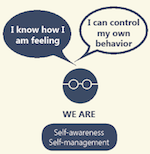
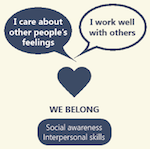
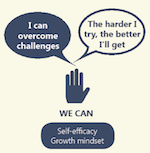
Q: The Expanded Learning 360°/365 collaborative is focused on promoting social emotional learning and character building and has defined this using three areas: We Are (self-awareness, self-management), We Belong (social awareness, interpersonal skills), We Can (self-efficacy, growth mindset). How does your mask exercise and workshop address these three areas? 

A: The Ever Forward Club was started to provide a safe space for young men to build connections in a brotherhood and to grow into men of character by helping them to develop healthy social-emotional tools. The work that Ever Forward - Siempre Adelante does with the Ever Forward Club, the Taking Off The Mask workshop and the #100kMasks Challenge is directly related to the areas that the collaborative has highlighted. 
http://partnerforchildren.org/selinelp/

We Are
: We help people see their individual unique selves and acknowledge 
what are the parts of themselves that they allow the world to see. Once they acknowledge this, they can see those things that they are perhaps not dealing with. 


http://partnerforchildren.org/selinelp/

We Belong: Once individuals recognize that they are not the only ones who are going through challenges, it helps them to more deeply connect to belonging to their own humanity and connection to others. 


http://partnerforchildren.org/selinelp/
We Can: I think that once people realize through our workshops or through seeing other masks in this campaign the encouragement is that they can make it, they can overcome the challenges that they face and most importantly they are not alone.

The social-emotional learning framework is so rich and sometimes young people and adults have one or two areas well organized and contextualized, but there are some of the areas that are in need of support and assistance. Our campaign is not designed to focus on any one area in particular, but we find that it helps individuals come alive to a deeper knowledge of themselves. 


——
Darius Simpson is an award-winning spoken word artist born in Akron, Ohio. He received his Bachelor’s Degree in Political Science from Eastern Michigan University. Darius uses poetry as a tool of healing, informing, and challenging his audience. His work was also featured in the film, Finding the Gold Within, a documentary by Karina Epperlein on what it means to be a young black male in America. Currently, Darius lives in Berkeley, CA and works as the Project Manager for the Ever Forward Club's #100kMasks Challenge. Before moving to Berkeley, Darius participated in several screenings and conferences, sponsored by Temescal Associates.

About Childhood Trauma

Source: Champions By Sam Piha Many of the children we serve in afterschool programs have experienced individual or collective trauma. Accord...