Monday, July 31, 2017

Tracking Federal 21st CCLC Funding

By Sam Piha


Sam Piha
We have been following President Trump’s proposed budget which eliminates the 21st Century Community Learning Centers Program. 

Below is an update from Lucy Friedman of ExpandEd Schools.

“The House Appropriations Committee voted to pass a spending bill that would cut $2.4 billion from the Department of Education.


Lucy Friedman
While the House bill improved on the Trump Administration proposal by rejecting its shortsighted attempt to completely eliminate the 21st Century Community Learning Centers (CCLC) Program, it still results in a $191 million cut from the previous year. Ultimately, the House bill falls short in providing the critical support needed to provide high-quality and evidence-based after-school programming for 1.6 million children in families in high-need communities across the country.”

In California alone, this would result in more than a  $20 million cut to 21st CCLC afterschool programs, with a $10 million cut to high school afterschool programs.
Photo Credit: Long Beach Youth Institute
Ms. Friedman goes on to state, “We hope that the Senate will course correct and provide the necessary supports for critical education programs that help all children succeed. ExpandED Schools and our fellow advocates like Every Hour Counts will continue to keep you abreast of federal policy news and ways you can help. Stay up-to-date on the latest news by signing up here and keep calling your senators to let them know you care about education.”

You can also track the budget process and learn how you can add your input by going to the Afterschool Alliance website. 

_________________________

You can read other blogs by the LIAS project by going to: 


  • Expanded Learning 360°/365 Project website
  • LIAS Blog Written for the California Afterschool Network

Wednesday, July 19, 2017

Considering Cultural Context When Promoting SEL

By Sam Piha

Sam Piha
There is a growing consensus among educators and youth development experts that skills related to social emotional learning (SEL) are important to youth’s future success. We see this emphasized in the work promoting a positive school climate and the improvement of afterschool programs.

In fact, the California Department of Education - Expanded Learning Division (EXLD) has pulled together an ongoing SEL Planning Team. This Planning Team will offer recommendations on how best to integrate SEL into the System of Support for Expanded Learning, deepen SEL opportunities for students, and foster alignment around SEL strategies with the school day.

But how do we take into account cultural differences in framing SEL? Are SEL concepts culturally bound? We believe that these are important questions to explore.

In their support of California's CORE Districts and the integration of SEL, the Partnership for Children and Youth (PCY) amended their work on SEL concepts.

Katie Brackenridge
According to Katie Brackenridge (Vice President of Programs at PCY), “Based on input from several large school districts, we are shifting our language, from stressing the 'I' to 'We are, We belong, We can'. This is based on multiple conversations about a collectivist versus individualist world view and the reality that increasingly the kids in our schools are coming from countries and cultures that are more collectivist than the dominant white culture in the US.”

Below are two resources to explore these issues. How would you answer the questions around SEL and cultural differences?

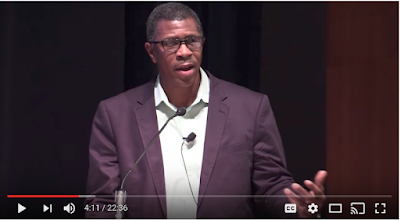
- A brief video presentation, “The Limits and Possibilities of Social Emotional Learning” featuring Dr. Shawn Ginwright from San Francisco State University.


- An article entitled, Why Don’t Students Take Social-Emotional Learning Home? by Vicki Zakrzewski from the Greater Good Science Center at UC Berkeley.


Photo Credit: Hemera, via the Greater Good Science Center
_________________________

You can read other blogs by the LIAS project by going to: 

  • Expanded Learning 360°/365 Project website
  • LIAS Blog Written for the California Afterschool Network

Wednesday, July 5, 2017

Afterschool Change Maker: An Interview with Sylvia Yee, Part 2

By Sam Piha


Sam Piha
Sylvia Yee, Vice President of Programs at the Evelyn & Walter Haas, Jr. Fund, recently retired. She was a strong believer in the importance of schools working closely with the communities they serve, and the power of public and private partnerships. 


We recently conducted a video interview with Ms. Yee before she retired. Below we offer part 2 from that interview. (View Part 1 here.)    


Q: The Beacons were based on a youth development perspective. Can you explain?


Sylvia Yee
A: The Youth Development Movement began during the early 1990s. A number of things came together that really catalyzed a new way of thinking about working with young people. Carnegie released an important report called "A Matter of Time", which argued that  the after school hours were an important time of both opportunity  and of risk for young kids, if they were left to their own devices with nothing to do. 

This report inspired us to think about making the after school hours a time of productive activities, where kids could be safe, and where they could learn in both informal and formal ways. It was a call to take that time and that space seriously.

Youth development wasn’t really about “kids as problems” and the need for services. It was about "How do we engage young people in their own development? How do we tap into their energy, their initiative, their leadership, and their capacity to give back to their peers and communities?" I loved it. It was really exciting. There were a lot of innovative programs that put kids at the center and put kids out front.


This had a really profound effect over the next couple of decades on the kind of programs that public systems support, the kind of policies and money that are now  available for after school programs. It ignited peoples' understanding of what after school programs could do when it's infused with this Youth Development perspective, and the importance of it. 


Q: How did the youth development perspective impact the San Francisco Beacons? 


A: The Youth Development Movement really set the stage for the San Francisco Beacons. The San Francisco Beacons benefited a lot from all this research and discussion about a new way of providing opportunities to young people. They were in  the vanguard of much of this work by establishing models for other places of how this could be done at scale, what the training should look like, the partnerships that it would take, and much more. We are greatly indebted to the Community Network for Youth Development, which managed the Initiative in its founding days and conducted trainings for the Beacon sites.

Q: In what way does the idea of equity intersect with after school?

A: These after school programs  are a way to level the playing field for all kids, so that all kids have the same chances to play leadership roles, to learn life skills, to get academic support.

I think equity is a prime motivating value of  advocates for after school programs. Every kid deserves to have this safe environment where they can learn and stretch their wings to become who they want. 

------------------------
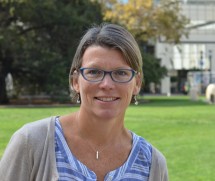
Sylvia Yee, former Vice President of Programs at the Evelyn and Walter Haas, Jr. Fund, started her career as a high school teacher. She moved on to administer educational programs at the elementary, secondary, and university levels in the United States and in China.


Passionate about social justice, Yee has been active in the fight for equal rights and opportunities at the local and national levels, and championed immigrant rights and gay and lesbian rights over the last two decades. A long-time community activist and leader, she was the  chair of the Bernal Heights Neighborhood Center in San Francisco where she led the center’s organizing and other activities aimed at addressing issues such as affordable housing and services for low-income seniors and youth. She also led a community nonprofit agency, Mission Graduates, which provides college going support to low-income, immigrant children in San Francisco and later worked as a program executive in education and health at the San Francisco Foundation.

_________________________

You can read other blogs by the LIAS project by going to: 

  • Expanded Learning 360°/365 Project website
  • LIAS Blog Written for the California Afterschool Network

Wednesday, June 28, 2017

Afterschool Change Maker: An Interview with Sylvia Yee, Part 1

By Sam Piha


Sam Piha
Sylvia Yee, Vice President of Programs at the Evelyn & Walter Haas, Jr. Fund, recently retired. Ms. Yee, who joined the Haas Jr. Fund in 1993, had a profound impact on the afterschool and youth development movement in the San Francisco Bay Area and the state of California. She was a strong believer in the importance of schools working closely with the communities they serve, and the power of public and private partnerships. 

In partnership with other leaders in the City, Ms. Yee launched the San Francisco Beacon Initiative by bringing together the city and county of San Francisco, the school district, and a bevy of other private foundations. (You can view a brief video on the history of the SF Beacon Initiative featuring Ms. Yee by clicking here.)


We recently conducted a video interview with Ms. Yee before she retired. Below we offer some excerpts from that interview.    


Q: How did you form your interest in the Beacon Schools model? 


Sylvia Yee
A: I got interested in the New York Beacons during a visit  to New York in 1992. I was able to see live what a community school looked like:a school that opened its doors after school, on the weekends, in the evening that had this really close connection to community. 


Debbie Alvarez from SFUSD, Laura Pickney from the mayor's office, and several other private funders, conducted a joint visit to New York. All of us came away just energized by what it would mean to recreate this in San Francisco.


Q: What did you find most interesting about the Beacon Schools model? 


A: One of the things that was new about Beacon Schools was that it was a Community Center in a school setting, and that the (quality of the) relationship and the partnership between the community and the school was actually pretty new.


It was also unique in the sense that this was about smart government. This was about using underutilized public space that lay empty on the weekends and evenings and after school. It was a smarter way for government to partner with non-profit organizations and to partner with community groups in a new way to serve kids. Remember this was before California Proposition 49 and the federal 21st Century Community Learning  Centers initiative.


It wasn't just about the use of school space. It was also about how kids were served. This was just at the beginning of the Youth Development Movement, and the  exciting new youth development ideas which were about what all kids need to grow up healthy.


The New York Beacons were attractive because it was this coming together, this partnership between the community and non-profits in school sites. They were a space where kids could experience a whole variety of activity and programs and spread their wings.


Q: How did you adapt this model to San Francisco? 


A: When we brought Beacons to San Francisco, we did it in a San Francisco way. We asked kids and parents in each of the neighborhoods what they wanted in their Beacons. At the same time as we established some common goals and principles for all Beacons, and some common programs that we wanted, we encouraged each Beacon to be culturally relevant to their neighborhood and to their kids--to do things in a way that was responsive and made sense to them. That's what I meant by doing it in a San Francisco way.


We helped bring private funders together and formed a philanthropic collaborative that  made it easier for the Beacons because we all agreed that all of the sites would submit a single proposal, instead of submitting 10 different proposals to 10 different foundations, and that we would all receive common reports. Everybody tried to figure out how to “bust the barriers” to making this successful.


Q: What were some of the challenges? 


A: Very simple things in the beginning seemed like big barriers: for schools and non-profit organizations to learn how to really be partners, to negotiate who cleans up the classrooms after the after school programs, to negotiate extra hours for the janitors.


There were some really hard nitty-gritty things that made using school sites difficult  to use, and I am happy  that the Beacons helped pave the way so that today, many more organizations and many more schools can have this kind of relationship more easily.

------------------------
Sylvia Yee, former Vice President of Programs at the Evelyn and Walter Haas, Jr. Fund, started her career as a high school teacher. She moved on to administer educational programs at the elementary, secondary, and university levels in the United States and in China.


Passionate about social justice, Yee has been active in the fight for equal rights and opportunities at the local and national levels, and championed immigrant rights and gay and lesbian rights over the last two decades. A long-time community activist and leader, she was the  chair of the Bernal Heights Neighborhood Center in San Francisco where she led the center’s organizing and other activities aimed at addressing issues such as affordable housing and services for low-income seniors and youth. She also led a community nonprofit agency, Mission Graduates, which provides college going support to low-income, immigrant children in San Francisco and later worked as a program executive in education and health at the San Francisco Foundation.

_________________________

You can read other blogs by the LIAS project by going to: 
  • Expanded Learning 360°/365 Project website
  • LIAS Blog Written for the California Afterschool Network

Friday, June 16, 2017

Send the Message: Afterschool Works for Everyone

By Sam Piha


Sam Piha
In our earlier blog posts, we have been tracking efforts to preserve afterschool funding at the state and federal level. Below is an update courtesy of efforts by our colleagues at the Partnership for Children and Youth (PCY), New York State Network for Youth Success, the Afterschool Alliance, and others.


FEDERAL
At the federal level, it is important that we work to preserve support for the 21st Century Community Learning Centers (21st CCLC) funding. You can get more information from the Afterschool Alliance. 


"Our efforts to educate members of Congress on the 21st CCLC program must not let up, especially with less than 4 months until the FY2018 Federal budget is required to be passed. This postcard campaign is a great opportunity to have your staff, students, and families share why this program is important to them." - New York State Network for Youth Success


Photo Credit: Afterschool Alliance

STATES
You can follow what is happening in your state by clicking here. You can also get more information about individual states by clicking here. 

CALIFORNIA
For our California readers, advocates have been working to increase the amount of resources for programs. This increase is important given the increase in program costs, especially wages.

“The Budget Conference Committee voted Thursday night to provide an additional $50 million in ongoing funding for ASES. This is not a done deal until Governor Brown signs the budget, but the Administration publicly supported the Conference Committee's action last night (which included increased funding for ASES), so we are hopeful. The full Senate and Assembly will vote on the full budget package next week, and then it will head to the Governor for his approval. Read the full press release here.”          - Partnership for Children and Youth


Photo Credit: Partnership for Children and Youth

You can help support this increased call for California afterschool by getting involved. For more information click here. 

_________________________

You can read other blogs by the LIAS project by going to: 

  • Expanded Learning 360°/365 Project website
  • LIAS Blog Written for the California Afterschool Network

Wednesday, June 14, 2017

Stream Finding the Gold Within

By Sam Piha


Sam Piha
Over the last two years, we have sponsored numerous screenings of Finding the Gold Within, a film by Karina Epperlein. 

FINDING THE GOLD WITHIN follows six African American college students from Akron, Ohio, for three and a half years. They have been mentored by the unique after school program Alchemy, Inc. and are well equipped with self-confidence and critical-thinking skills, ready to become the heroes within their own stories. The protagonists grow before our eyes, whether navigating racial provocations, or seeking support with friends, estranged fathers, and wise grandmothers. Each of them is hell-bent on disproving society's stereotypes and low expectations. What will their paths and trials look like?


Screening and appearances at Pacifica Graduate Institute, Photos by Timothy Teague
These screenings were conducted in partnership with Alameda County Office of Education; the San Francisco Department of Children, Youth, and Their Families; and Oakland Unified School District. Our latest screening was for participants at the 2017 BOOST Conference. We also featured mentors and youth from Alchemy, Inc. at our conferences and Speaker's Forums. 


We are excited to announce that Finding the Gold Within is now available for streaming on several platforms: Amazon Prime, iTunes, Google Play, Vudu, and Hoopla.

We encourage everyone to view this documentary and share with youth and other afterschool stakeholders.

Tuesday, June 6, 2017

Call or write Congress to support afterschool and summer learning programs

By Sam Piha

Sam Piha
During the Bill Clinton presidential administration, Congress approved the first appropriation for 21st Century Community Learning Centers (21st CCLC). It was one of the fastest growing social programs in our country’s history. 

President Trump’s budget calls for eliminating funding for the 21st CCLC. It’s now up to Congress. Nearly two million children and families would be left without reliable afterschool choices.

You can make a difference: call on Congress to protect funding for afterschool and summer learning programs. The Afterschool Alliance is urging afterschool advocates to phone their representatives on Wednesday, June 7th but you can call or write anytime. We wrote to Rep. Barbara Lee, and she quickly replied. 


Below are some resources that may be helpful. 

  • You can go here to find talking points and suggestions from the Afterschool Alliance to assist you with your call or letter. 


Photo Credit: The Afterschool Alliance
*Please note that calling your representative in Congress to urge them to save 21st CCLC funds is considered lobbying and should not be done during staff hours paid for by 21st CCLC funds. If you have any questions on what you can do to participate, please feel free to reach out to the Afterschool Alliance. 


Thursday, June 1, 2017

Mindfulness Trickle Up - From Afterschool to School

By Sam Piha


Sam Piha
We have been promoting the use of mindfulness techniques in afterschool to address the self care of youth workers and the needs of youth participants. Mindfulness is well aligned with social emotional learning (SEL).

There is new information and growing evidence that confirms that mindfulness exercises within school and afterschool settings are excellent ways to promote the health and well-being of adult staff and increase impulse control and ability to stay focused among youth who participate in the exercises. 

Over the years, we have conducted trainings for the Riverside County Office of Education and Delano Union School District. We have posted interviews with Ken Dyar and Allison Haynes on their experience of Mindfulness in Afterschool.


Dr. Katarina Roy Schanz
We were thrilled when Dr. Katarina Roy Schanz, Student Assistance Program Coordinator at Riverside Unified School District, requested training for her in-school staff. This was a great example of "trickle up" -  from afterschool to school day.

Below Dr. Roy Schanz responded to a couple of questions for this blog post.

Q: Why are you bringing mindfulness into Riverside Unified School District?

A: The primary target group for this mindfulness training are our Student Assistance Program (SAP) Counselors and SAP Behavior Support Teams. We are hoping to add another skill set for them to use in their work with students. Additionally, adding mindfulness to their self-care practice will help the team both personally and professionally.


Photo Credit: http://www.theidproject.org/

Q: What are you hoping that you can accomplish with mindfulness training for school personnel? 

A: The research around mindfulness in schools prompted our decision to provide this training for our Student Assistance Program team. They will then take their learning to the staff and students at their respective schools. We’re hoping that by implementing a mindfulness practice, we will see decreases in anxiety and improvements in self-awareness and social-emotional skills, among other positive changes.

--------------------
Dr. Katarina Roy Schanz is the Coordinator of the Student Assistance Program with Riverside Unified School District. Dr. Roy Schanz has been an educator for 21 years. She has served as a school counselor, assistant principal, and principal. Dr. Roy Schanz holds two Master’s degrees, one in School Counseling from the University of La Verne and the other in Educational Administration from California State University, San Bernardino. Additionally, she earned her Doctorate in Organizational Leadership from the University of La Verne.
--------------------


Temescal Associates developed a 16-week curriculum for afterschool workers as well as a two-day training for school and afterschool staff. You can view the curriculum here and contact us if you wish to purchase a full color hard copy.


Thursday, May 25, 2017

Advocating for Sustained Funding of Youth Programs: An Interview with Margaret Brodkin, Part 2

By Sam Piha


Sam Piha
With the call to defund the federal 21st Century Community Learning Centers Initiative, never has it been more important that we act to ensure the sustainability of funding for youth programs. Below, we provide Part 2 of an interview with Margaret Brodkin (view Part 1 here). Ms. Brodkin led a campaign in the early 1990’s to develop a permanent “children’s fund” in San Francisco – a stable and sustainable fund of city tax dollars dedicated to programs that support children and youth. 

Ms. Brodkin has gone on to assist cities and counties across the country to develop their own “children’s fund”. 

Q: Can you give details on what else this “children’s fund” proposal included? 

A: The latest version of the Children’s Fund passed in 2014. There were lots of other provisions in this version, as well as the other versions – although we kept adding stuff each time. Major provisions included:
Photo Credit:
https://cacnc.org

1) Creation of a Children’s Baseline Budget. This required the city to calculate what is being spent on kids every year, and not reducing that amount in each year’s budget. The Baseline could also go up (or down) with the city’s revenues. This turned out to be as valuable as having new revenue. 

2) Creation of an Advisory and Oversight Committee appointed by the Board of Supervisors and the Mayor with the power to oversee the Department of Children, Youth, and Their Families (DCYF) budget, have input into the hiring of the DCYF director, and approve the community needs assessment and allocation plan.


3) Creation of a planning process that required a Community Needs Assessment, defining multiple levels of input from the community and all relevant city departments, and an Allocation Plan that determines what services will be funded and by how much.

4) In 2014, the age range of those served was expanded to age 24, with a special funding stream for transitional age youth.

5) Requires program evaluations for what is funded.

6) Has a specific list of services that can be funded. Services include: youth development, family support, early care and education, career readiness, violence prevention. It also includes services that cannot be funded using Children’s Fund monies. This includes funding for law enforcement. 

7) Creation of a Providers Advisory Committee to DCYF.

8) 25 year sunset.

Q: In what ways was this revolutionary for American cities?
Photo Credit:
http://www.childrensaidsociety.org/

A: We were the first city in the country to do anything like this. Other people looked at it and it got replicated in a number of other places, like Oakland, Portland, and Seattle. I have a project where I’m helping cities and counties around the state do the same thing. 

I work with people now trying to do the same thing and one of the biggest barriers they face are city representatives saying, “that's not our job – it’s not something you use city government dollars to do. That’s the job of state, federal, and foundation dollars. Our job is to provide police and fire and this is somebody else's job”. 

Q: What were some of the bigger challenges and lessons?

A: The challenges we faced were political in nature. When you want to get money out of the government, its politicians that ultimately have to do it, or the public in our case. We had to put the issue before the public with an election. There were a number of things:

1) We are working in a field that has a huge amount of power because there are so many of us - youth workers, child care workers, and parents. What we do is so important but we're not good politicians. One of the challenges is how do you train a field to use its political power? 

It took years and years to get people to feel like “I can go into city hall; I can testify; I can bring parents from my program; I can be part of the budget process; I can walk precincts; I can become a political force for the things that I believe in”. That's a major change in how we think of ourselves, not just as people who care for kids and young people, but people who can use their political power to change policies.
Photo Credit:
http://fonddulac.uwex.edu/
2) Part of the challenge is getting out of our bubble where everybody is a child care worker, and figure out who our allies are. I was in a meeting yesterday in another county where they're trying to do a children's fund and who's at the table? The iron workers. How do we align ourselves with labor? How do we align ourselves with the faith community? How do we develop a broader base of support for the things that we believe in? 

I’m as guilty as anyone. We use a language no one understands. So we have to learn a whole set of new skills. How do you talk to people who have no idea what you're talking about when you actually say “youth development”? It’s not a common phrase. What do you really mean by that? It’s a whole process of learning how to be in a political arena, in an arena where you have to persuade people.


Photo Credit: http://www.margaretbrodkin.com/
3) Another challenge is that the people in our field are really, really nice people. They don't like to talk about money, so they don't like to say we need money. Playing hardball politics is really, really hard. It doesn't come naturally to all people. 

4) How can we all get on the same page? How do we not fight with each other - the child care people fighting with the youth development people, fighting with the family support people? We have to learn how to develop a common agenda and work together or we diffuse our power and our ability to get things done.

-------------------------------
Margaret Brodkin
Margaret Brodkin is a nationally recognized children’s advocate and policy pioneer and known as the “Mother of the San Francisco Children’s Fund,” a multi-million dollar annual fund that made San Francisco the first city in the country to provide local dedicated funding for children. She is currently Founder and Director of Funding the Next Generation.


Ms. Brodkin served 26 years as Director of Coleman Advocates for Children and Youth in San Francisco, California – turning a small community organization into an influential powerhouse for kids and a national model for creating a diverse and lasting local children’s movement. Ms. Brodkin later served as Director of San Francisco’s Department of Children, Youth & Their Families. She then served as the Director of New Day for Learning – an intermediary partnership organization launching San Francisco’s community school initiative, resulting in the institutionalization of community schools as a centerpiece of the SFUSD education reforms.

Thursday, May 18, 2017

Advocating for Sustained Funding of Youth Programs: An Interview with Margaret Brodkin, Part 1

By Sam Piha


Sam Piha
For over 100 years, afterschool and youth development programs have struggled to secure stable, sustainable funding. Why is this? Is it because we don’t value our children or believe in the importance of out-of-school learning and support? Or is it structural? 

We conducted an interview with Margaret Brodkin, who led a campaign in the early 1990’s to develop a permanent “children’s fund” in San Francisco – a stable and sustainable fund of city tax dollars dedicated to programs that support children and youth. Ms. Brodkin has gone on to assist cities and counties across the country to develop their own “children’s fund”. Below, we offer part one of a two-part interview with Ms. Brodkin. 

Q: How did you get into this business? 

A: My first job, in the early 1970s in San Francisco, was to run the children's program at the Jewish Community Center. What we began to notice was that there was a group of parents who would send their kid to the art class on Monday, dance class on Tuesday, gymnastics class on Wednesday, who really needed something every day. 

'Afterschool' wasn't a common word. The idea that someone needed a program every day for their kids was controversial at the time, because women weren't supposed to work. We decided to start this everyday, after school program. We had to get a special grant to do it, I had to get in my car and drive around and pick up all the kids who were in that program.
Photo Credit:
http://www.beyondchron.org/

The program is still in existence and now it is the largest after school program in San Francisco. It started by realizing that kids needed an every day experience. My idea about the importance of community centers - whether its the YMCA or the Boys and Girls Club or the Jewish Community Center or neighborhood center - that kind of community institution was such a fabulous resource. 


The other experience that shaped my perspective was a conference I attended that featured Richard Murphy and Geoffrey Canada. They were talking about the New York Beacon Centers. The idea that a school could be a community center was new. A school could be the place where children and families could come and belong, and it could be the center of the community. It just riveted me, as a model, and came back from the conference and said, “we've got to do this in San Francisco”. 

I think that it is a model for everywhere because every child goes to school. Schools should be the center of neighborhood life. It’s a model that's appropriate for the suburbs, for a city, and particularly appropriate for a rural area. 

Q: You were instrumental in drafting a city proposition to ensure the city had the needed resources to positively impact youth outcomes. What were some of the basic changes that this initiative brought? 

A: At that time, I was the head of a children's advocacy organization in San Francisco where we worked on lots of issues trying to get services and programs for kids but we always hit a brick wall - there was never the money to do it. So we started a crusade to get money for children's services. We introduced the idea of a children's budget and submitted that to the city for three years in a row.


Photo Credit:
https://onpublico.com
We would have some wins, we would have some losses, but we could never really compete with police and fire and the other things the city felt were their responsibility. We got the idea that we would put a measure on the ballot to create a dedicated fund that we call the “children's fund” that would just be for children and youth services. This would be an operating part of how San Francisco did its business.

Everybody in city hall opposed it because they didn't want to carve out money for kids. They wanted the flexibility to add more police, etc. and we said, “no - kids will never be able to compete in the dog eat dog budget process”. We decided to put this on the ballot. We collected 67,000 signatures and it passed. Now its been reauthorized three times - the first time it was passed was in 1991. It became the major source of funding for children's services in San Francisco. 

The children's movement in San Francisco became a political force to be reckoned with and it started with getting this measure passed. We went on for every year getting additional dollars in the budget, getting additional policies changed. 

Q: What did the passage of this proposition change in San Francisco? 

A: There were several changes: 
1) It created this funding stream. The original Children’s Fund was a set aside of 2.5% of the property tax, and we inched it up in each reauthorization campaign, so it is now 4%. The first year it was in effect in 1992, it was $12 million; and within a year it will be $94.7 million.

2) It gave us a huge amount of flexibility with what we could do at the local level. It allowed us to go into neighborhoods that no one had been in before, it allowed us to serve new populations like children with disabilities and LGBTQ young people. That's how we ended up funding the Beacons; that's how we ended up funding health services in the schools; its how we ended up funding arts programs; and more. 
Photo Credit:
http://diycampaigns.com/

3) It allowed us to focus on prevention. So many resources go in to address problems after they exist, like after a child is in trouble, or after someone is sick or involved in the child welfare system. It gave the city the opportunity to invest in prevention.

4) It allowed us to create a new office, the Department of Children, Youth, and Their Families, which I had the opportunity to lead for five years. This office provided the mechanism for planning; for coordinating; for giving out the money; for holding people accountable; for having a transparent process that people can get engaged in. 

5) By having all this local money, people could leverage state and federal money. This was a huge success for the youth and children's movement and we gained a kind of power to continue the good fight.

-------------------------

Margaret Brodkin
Margaret Brodkin is a nationally recognized children’s advocate and policy pioneer and known as the “Mother of the San Francisco Children’s Fund,” a multi-million dollar annual fund that made San Francisco the first city in the country to provide local dedicated funding for children. She is currently Founder and Director of Funding the Next Generation. 

Ms. Brodkin served 26 years as Director of Coleman Advocates for Children and Youth in San Francisco, California – turning a small community organization into an influential powerhouse for kids and a national model for creating a diverse and lasting local children’s movement. Ms. Brodkin later served as Director of San Francisco’s Department of Children, Youth & Their Families. She then served as the Director of New Day for Learning – an intermediary partnership organization launching San Francisco’s community school initiative, resulting in the institutionalization of community schools as a centerpiece of the SFUSD education reforms.


About Childhood Trauma

Source: Champions By Sam Piha Many of the children we serve in afterschool programs have experienced individual or collective trauma. Accord...