Showing posts sorted by relevance for query vandell. Sort by date Show all posts

Monday, October 29, 2018

An Interview with Researcher Deborah Lowe Vandell

By Sam Piha

Sam Piha
Deborah Lowe Vandell has been a leading researcher on expanded learning programs since 1985. Dr. Vandell agreed to respond to our interview questions regarding her research on the field of afterschool. Below are some of her responses. 

Dr. Vandell appeared in our video on the Learning in Afterschool & Summer learning principles and our documentary on the History of Afterschool in America. She will also be sharing her thoughts in a plenary presentation, and a workshop alongside fellow researcher, Milbrey McLaughlin at the upcoming How Kids Learn VIII conference on December 6th, 2018 in Oakland, CA.

Q: You have been studying and researching afterschool programs for
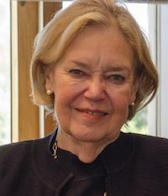
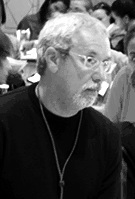
Deborah Lowe Vandell
many years. Can you cite/list what you think are the most important lessons?


A: For me, the most important lesson is that the quality of children’s daily experiences at programs is critically important. Research, my own and the research of others, has demonstrated repeatedly the central role of caring, supportive relationships with adult staff for children’s well-being as well as their academic and social competencies over time. 

Lesson 1 is that the quality of staff-child relationships is front and center. Research also has shown that these supportive staff-child relationships typically occur in the context of activities that are engaging to young people and that build on the interests of the young people, a second important lesson. A third lesson, I think, is that we need to be doing more to support adult staff in their work. Staff training is critical as is planning time. Developing and retaining staff who have caring, supportive, and respectful relationships with young people is central as is staff who can provide rich opportunities for learning and engagement. Staff turnover is a big problem.  

Q: Civic engagement and youth activism is an increasing part of afterschool youth programs. Can you comment on this trend as a part of positive youth development?

A: I just returned from a meeting that convened 250 researchers and practitioners who focused on this very issue. A recurrent theme across many presentations (by both researchers and practitioners) was the ways in which afterschool programs can foster civic engagement and youth activism. The connections between positive youth development, social-emotional learning (SEL), and character development were another recurrent theme. It is exciting for me to see connections being made across areas that are too often in separate silos.  

Source: Jenniferbodford.com
Q: Over the years, there has been much discussion on the indicators we should use to assess the effectiveness of afterschool programs. What are your thoughts on this? 

A: This is a BIG question. A critical first step is we have to specify effectiveness with respect to what end - effectiveness with respect to:

  • Particular youth outcomes in the short-term or youth outcomes in the long-term;
  • Access to high quality programs; 
  • Sustained participation or to daily attendance numbers; or
  • The quality of children’s daily experiences at the program? 
It’s only when we clarify the particular aspects of effectiveness that we are interested in can we start to identify indicators that can be used to assess effectiveness.  

Q: Can you share what you are or will be studying in regards to afterschool?

A: I am in the midst of three afterschool projects right now: 

I have been studying effects of afterschool programs and organized activities (their quality, duration, type) on adolescent outcomes at age 15 and the end of high school. My colleagues and I have now extended that work to ask if after school activities are linked to adult outcomes at age 26, including educational attainment, employment, civic engagement, physical and mental health, as well as positive social relationships. Results at age 15 and end-of-high-school are pointing to links between sustained participation and positive academic and social outcomes. Analyses of the age 26 data on 815 participants are underway. 

My second project is a series of research syntheses. This project is a collaboration with Professor Sandra Simpkins at UC Irvine and a wonderful team of graduate students. One of the papers that we are working on examines conceptualizations of program quality and links between different aspects of program quality and youth outcomes. A second paper focuses on the challenges and opportunities of programs that serve Latino and African-American children and youth. In preparing the data base for these syntheses, we scanned more than 2000 papers and are focusing our analyses on 200 papers published since 2007. 

The third project, is also in collaboration with Professor Simpkins. In this study, we are conducting secondary data analyses of two large data sets, the National Institute of Child Health and Youth Development (NICHD), Study of Early Child Care and Youth Development (SECCYD), and the Study of Promising Afterschool Programs with a focus on character development during childhood and adolescence. In this work, we are examining individual aspects of character such as persistence and work habits as well as inter-personal aspects of character such as prosocial behaviors and helping others.  

Q: Any thoughts on what the future of afterschool will hold, either in regards to policy or practice? 

A: I am of two minds about the future of afterschool. The good news is that there is now widespread recognition of the role that afterschool programs (and out-of-school time more broadly) play in children’s development and well-being. Many parents, educators, researchers, and policy makers now endorse investments in afterschool as necessary and important. This is very different than when I did my first study of afterschool programs in 1985! 

The bad news is that there are still serious inequities in children’s access to high quality afterschool activities. Children from low-income families have less access than their more affluent classmates, and this lack of access is undermining their life opportunities. Relatedly, I worry that the funding for programs that serve low-income children remain precarious. 

---------------------
Deborah Lowe Vandell, Ph.D., is the Founding Dean of the School of Education at the University of California, Irvine, where she is a Professor of Education and of Psychology and Social Behavior. The author of more than one hundred fifty articles and three books, Dr. Vandell studies the effects of afterschool and summer programs on children's academic, social, and behavioral development.

Wednesday, May 22, 2013

A Conversation with UCI Professor and OST Researcher, Deborah Vandell


By Sam Piha


Sam Piha

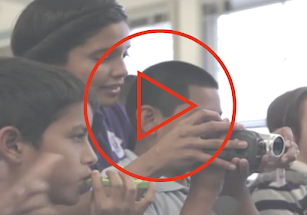
In late 2012 and early 2013, we conducted a number of videotaped interviews with educational and out-of-school experts on the Learning in Afterschool & Summer learning principles. These taped sessions included interviews with Deborah Vandell, State Superintendent Tom Torlakson, neurologist Judy Willis, youth development specialist Karen Pittman, Professor Pedro Noguera, two Bay Area school principals, CDE After School Division Director Michael Funk, and others. These videos will be excellent training tools and will be made available very shortly. The videos were shot by youth videographers and produced by Temescal Associates.

Below is a portion of an interview with UCI Professor and OST researcher, Deborah Vandell. To view two short videotapes of our conversation, click here.


Q: The LIAS learning principles were not intended to apply to strictly afterschool settings. In your experience as an educator and researcher, how are these principles, when taken together, relevant to young people’s learning? 
A: I think that the learning principles in after school and summer really get at the core of learning for students - starting in early childhood, going through to university. So if we think about those core principles, the first is active. We know that young people learn by being active. Many years ago, Piaget started talking about the key to learning being children’s activity. It’s in the context of activity that children and young people develop new skills.  

A second principle is the principle of collaboration. And this is also very important. The most influential of the psychologists would be Vygotsky, who talked to us about collaboration, and that children really learn through what we call the zone of proximal development. What young people can do alone is not as advanced as what they can do with others in a group.  So in a group where they’re collaborating, we're able to actually move them into that zone to develop their skills further.  

A third principle, really important within the learning and after school framework, is that learning needs to be meaningful, it needs to be embedded in activities that are important for young people. When I think about the importance of it being meaningful, what really comes to mind is the work of Reed Larson, who did some really important work looking at development of initiative and engagement. What he found is that when young people are in school, what they often are doing is putting forth a lot of effort, but they’re not really motivated - its not something they really care about. What happens in afterschool activities, when they’re really working, when they’re active, they’re choosing those activities and they are also focused on them, it’s the best combination for learning that is meaningful.  

The fourth principle is that programs and activities should be working towards mastery.  Now the striving towards mastery is not an activity that you can do in one day, in half a day, its really an activity that you’re building over time.  When you’re building for a concert, you're practicing, you're developing those skills. When you are getting out to put together a newspaper, when you’re planning a play, which is a complex activity, it gives young people a chance to put those skills together. Notice many of them are also working with others in a group, often with a culminating event. Jacqueline Echols, in a very important book on the role of positive youth settings for development, as part of the National Academy of Science report back in 2002, talked about this learning to support mastery as a key element to support positive youth development.  

And then the fifth principle is that of expanding horizons. Our young people live in a global society. Our young people are living in a society in which science is becoming increasingly important, mathematics and those activities have to really happen in context.  Part of what students can do in afterschool and in summer, in really fine programs, is that we can expand the horizons, beyond where they are in this moment in time.

(This is only an excerpt of our complete interview. To view a complete videotaped interview, click here.)
_______________________

Deborah Vandell is a Professor of Education and Psychology and Dean of the School of Education at the University of California, Irvine, discusses the relevance of the Learning in Afterschool and Summer Principles. Ms. Vandell has longstanding interests in three areas: (1) early child care and education - its effects on children's social, cognitive, and behavioral development and strategies for improving the quality of early care and education, (2) after school programs and activities - their impact on children and youth and strategies for improving the quality of after-school programs, and (3) children's relationships with peers, parents, siblings, teachers, and mentors as developmental and educational contexts.

Tuesday, June 1, 2021

Dr. Deborah Lowe Vandell and the Longitudinal 26- Year Afterschool Study

​Ongoing research on out-of-school time programs is essential to help shape our practice and ensure ongoing support from policy makers. Dr. Deborah Lowe Vandell, founding Dean Emerita of Education at the University of California Irvine, has been a leading researcher on expanded learning programs since 1985. Dr. Vandell appeared in our video on the Learning in Afterschool & Summer Learning Principles and our documentary on the History of Afterschool in America. She also shared her thoughts in a plenary presentation and workshop at the How Kids Learn VIII conference and has been interviewed for past LIAS Blogs. 

In a recent article from the Mott Foundation she was interviewed about the release of a 26- year study on the impacts of early childhood and afterschool programs. “As one of the principal investigators with the National Institute of Child Health and Human Development (NICHD) Study of Early Child Care and Youth Development, she has conducted an intensive study of the development of 1,300 people from birth to 26 years. This work is viewed by many social scientists as one of the most comprehensive studies of the short- and long-term effects of early care and afterschool education to date.”  

Below we quote some excerpts from the interview with Dr. Vandell published by the Mott Foundation. You can read the full Mott interview here.

Q: What has research on afterschool programs revealed since you first started working in this field? 

Deborah Lowe Vandell
Photo: Steve Zylius
 
A: Many researchers in both the United States and other countries are now studying afterschool programs and activities in childhood and adolescence. The good news is that our science has now substantially increased what we know about these important developmental contexts, and we are now much better situated to meet the needs of children and adolescents by providing accessible, affordable, high-quality afterschool learning opportunities. 

We’ve also identified many of the key ingredients needed for out-of-school time to have positive effects. This work has shown that consistent and sustained participation in high-quality afterschool programs is linked to positive academic and social outcomes for both children and adolescents. However, findings are less clear (and sometimes even negative) when participation is sporadic or activities are lower in quality, so we have to pay close attention to program quality and to participation over time. 

Q: Tell us about your latest study. What were the biggest questions? 

A: My latest study is one that circles back to that first afterschool study. This latest study looked at children’s early care and education and their organized afterschool activities in elementary school and asked how these two sets of experiences (early care and afterschool care) are related to children’s academic and social functioning in high school. 

In this study, my coauthors and I followed almost 1,000 children over time and asked if both early care and education (ECE) and afterschool organized activities during elementary school are related to how students are doing in high school — both academically and socially. We focused on ninth graders because the high school transition is challenging for many adolescents, and we wanted to know if children’s early care and afterschool activities in elementary school could help adolescents to meet these challenges. 

Q: What did you and your coauthors find?

A: We found that both early child care and out-of-school time during elementary school predicted higher academic achievement at age 15. 

Children who received higher quality ECE and who had sustained participation in afterschool organized activities demonstrated higher academic achievement in high school. These effects on academic achievement were additive — with the effects associated with afterschool programs building on or adding to the early care effects. Importantly, the effects associated with early care and afterschool care also were exactly the same size, indicating that both are good investments. 

In this paper, we also found that early care and out-of-school time were related to different aspects of behavioral development. Higher quality ECE predicted fewer behavioral problems in adolescence, whereas afterschool organized activities were linked to greater social confidence. 

We found that consistent participation in afterschool was important for building children’s social competence — including feeling more confident about meeting new people and interacting with peers and adults — which bodes well for students’ future success in school and in the workplace. These benefits were not associated with ECE experiences, suggesting that afterschool programs serve a unique role in this respect. 

Q: What makes this body of work unique and its findings important? 

A: There are several factors that make the study noteworthy, I think. The first is the effort to examine early care and education and out-of-school time in relation to later development. For the most part, these two important developmental contexts have been studied separately. 

Second, the study finds effects of these earlier experiences on longer term outcomes in adolescence. These effects, evident in the 15-year-olds, suggest that the benefits of early care and elementary school activities do not fade away, but persist over time. Now we are asking if the effects continue to be evident in adulthood. 

Third, the sample in this study was economically, geographically and ethnically diverse, suggesting that these findings on the benefits of afterschool programming have wide generalizability for children in the United States. 

This work is consistent with and extends prior research by showing that sustained participation in high- quality afterschool programs in elementary school is linked to positive academic and social outcomes in high school and that those effects persist. 

Q: What does the study imply for post-COVID-19 recovery? 

Source: www.njsacc.org
A: Researchers and educators are deeply concerned about the effects of COVID on children’s learning and development — and the impact of school closures, disruptions and trauma brought on by the pandemic. 

In one set of studies released by NWEA, a nonprofit research organization, researchers documented a significant widening of academic achievement gaps by income and race last spring, which was further exacerbated by school closings and disruptions this fall. Other researchers are reporting increases in students’ social-emotional problems as a result of the trauma and disruptions brought on by COVID. 

The work by NWEA and others is highlighting that children growing up in under-resourced families and communities are going to be in particular need of high-quality afterschool and summer programs. However, because of the financial disruptions being experienced by many low-income and working families — and because of the budget shortfalls facing many communities — children who most need high-quality afterschool programs will likely have less access to these programs and services. To address these serious issues, a coordinated response is going to be needed — one that brings together the resources of early childhood programs, afterschool programs and schools. 


Source: www.whitehouse.gov


President Biden's COVID Relief Bill contains billions of dollars for afterschool and summer learning programs. To learn more:

Thursday, June 30, 2022

Youth Work Basics


By Sam Piha

The COVID-19 pandemic wreaked havoc with afterschool programs. The one silver lining was the abundance of online professional development resources that were created and made available online.

According to many program leaders, they are now working to refill staff positions. This will require training drawing on “youth work basics.” Below we offer one such “youth work basic”- the Learning in Afterschool & Summer (LIAS) Learning Principles, as well as discussion questions and some assessment tools. 

I think that the Learning Principles in the Learning in Afterschool and Summer Project really get at the core of learning for students starting in early childhood going through the university.” – Dr. Deborah Vandell, former Dean of the School of Education, UC Irvine, and leading afterschool researcher

We invite you to view this short video which reviews the importance of the LIAS Learning Principles taken from interviews with afterschool and educational leaders and The LIAS Learning Principles Position Statement which details each of the 5 LIAS Learning Principles and serves as an excellent handout for program staff, parents and other stakeholders. 


About the LIAS Learning Principles
We know that most afterschool youth programs are dedicated to promoting the learning and healthy development of young people. Several years ago, we conducted a literature review specifically focused on young people’s learning. We distilled what we learned into 5 Learning Principles. They are designed to guide the development of quality afterschool programs. 

We believe that these principles are both universal and evergreen. Thus, we were pleased to read the article in the Signal Tribune entitled, LBUSD Will Expand After-School Programs Districtwide, Asks for Parent Input. The article quoted Cindy Young, LBUSD senior director of Early Childhood and Extended Learning, in which she cited the LIAS Learning Principles as the standard undergirding their afterschool programs. 

OTHER LIAS RESOURCES: The LIAS Learning Principles are foundational to anyone designing and implementing youth programs. These additional resources below can be shared with all program staff and stakeholders.

VIDEOS: 
Dr. Pedro Noguera
OST Leaders Discussing the LIAS Principles (compilation)
Out of School time leaders discuss the importance and impact of the Learning in Afterschool & Summer Principles in and out of the classroom. This video (18 min) features interviews with leaders Tom Torlakson, former Superintendent of Public Instruction for the California Department of Education; Dr. Deborah Vandell, Professor of Education and Psychology and former Dean of the School of Education at UC Irvine; Andi Fletcher, Afterschool and Educational Consultant for the Center for Collaborative Solutions; Carol Tang, Director of The Coalition for Science After School; Jennifer Peck, Executive Director of Partnership for Children and Youth; Dr. Pedro Noguera, Professor of Education at USC; Paul Heckman, Associate Dean and Professor at UC Davis; Steve Amick, Director of School District Partnerships at THINK Together; and many more! 

Dr. Deborah Vandell
Individual Interviews with OST Leaders Discuss the LIAS Principles
On our LIAS Youtube channel are 21 individual video interviews (3-17 min) with OST leaders (see above) sharing their thoughts on the LIAS Learning Principles.


WRITTEN DOCS/PAPERS: Afterschool Programs that Reflect the Learning in Afterschool & Summer Learning Principles
This paper (49 pages) describes the practices of actual afterschool programs that exemplify the learning principles promoted by the Learning in Afterschool & Summer (LIAS) Learning Principles. This paper offers some background and a full description of the Learning in Afterschool & Summer project and its five learning principles that should define quality afterschool programming. 

A Crosswalk Between the Learning in Afterschool & Summer Learning Principles and Afterschool Quality Measurement Tools
This paper (8 pages) identifies the overlap between the LIAS Learning Principles with items in six program quality measurement tools that serve as good examples of measurement tools for afterschool programs.

Summer Programs That Reflect the Learning in Afterschool & Summer Learning Principles
This paper (16 pages) highlights the wide variety of ways in which California summer learning programs are using the LIAS principles to engage and inspire learning in young people.

LIAS BLOGS: These blogs focus on the issues regarding the LIAS Learning Principles.

Millions of professionals and volunteers work with young people every day in the many settings where youth play, learn, and grow outside of the school day. Yet, we have little collective information about this essential workforce. You can help change this!”- California Afterschool Network

Take the survey today, click here.

Tuesday, February 5, 2019

Best Posts of 2018


By Sam Piha

Since we launched the Learning in Afterschool & Summer (LIAS) project, we have published over 354 blog posts, attracting 410,062 views. In 2018, we published 34 blog posts, attracting 57,050 views. Below, we list some of our favorites and most viewed posts.

FAVORITES
Photo Credit: ResponsiveClassroom.org
The Power of Sharing Circles (May 2018)
We know that bringing together young people and offering them the opportunity to have their individual voices heard in the larger community is an important practice. We are referring to “talking or sharing circles” - bringing youth together in a circle and asking each individual to speak while the rest of the group practices active listening. Read more.

New Educational Trends and Terms (April 2018)
In America, educational trends and thinking don’t evolve. Instead, they tend to swing like a pendulum or cycle back and forth. To see a good example, just look at the writings of John Dewey from the early 1900s. Read more.

Shawn Ginwright
Shifting From Trauma Informed Care to Healing Centered Engagement (August 2018) 

Dr. Ginwright recently authored an article entitled Shifting From Trauma Informed Care to Healing Centered Engagement. In this post, we offer a few excerpts from his article and urge everyone to read it in its entirety. Read more.

MOST VIEWED
In the Aftermath of Parkland: What is the Role of Expanded Learning Programs? (March 2018)
We were shocked and dismayed by another mass shooting, this one at  Stoneman Douglas High School in Parkland, FL. As a field that promotes safety, youth voice, and youth civic engagement, we commend the students that have spoken up about gun violence. Read more.

HEARTSET: Transforming Teaching & Learning (March 2018) 
Have you ever thought that the challenges that educators face today are different from any in modern time?  With political and social unrest creating a stressful environment, how can we best uplift ourselves and assist our young people deal with life and learning? Read more.

How Not to Lose Your Mind Over Every New Trend in Your Field (March 2018)
It sometimes feels like risking whiplash to try to follow all the emerging trends in our field and the potential funding, resources and opportunities that come along with them. Every few years, sometimes more often, there are new trends that are often accompanied by or are a part of funding opportunities. Some of these trends stick around for awhile until something newer, younger and sexier gets introduced. Some trends seem to come around in cycles. Read more.

Johanna Masis
PRACTITIONER GUEST BLOGGERS
Johanna Masis Sharing Circles: Cyphers (May 2018)
At Oakland Leaf, all of our programs incorporate the practice of Cyphers. We believe in the power of people's stories and life experiences regardless of how many years they have been alive.  There is a collective wisdom that exists and needs to be honored. When we practice Cyphers, or community circles, the benefits are immense. Read more.

INTERVIEWS WITH FIELD LEADERS
An Interview with Researcher Deborah Lowe Vandell (October 2018)
Deborah Lowe Vandell has been a leading researcher on expanded learning programs since 1985. Dr. Vandell agreed to respond to our interview questions regarding her research on the field of afterschool. Read more.

What Difference Does It Make? An Interview with Milbrey McLaughlin
Milbrey McLaguhlin
(June 2018)

Dr. McLaughlin recently released a new book entitled, You Can’t Be What You Can’t See: The Power of Opportunity to Change Young Lives. In this post, we offer her responses to a few questions regarding her work. Read more.

INTERVIEWS WITH PRACTITIONERS
Practitioners Speak Out: Serving the Needs of Immigrant Youth (February 2018)
We previously published a blog post on the issue of supporting immigrant families and their children in afterschool. We want to follow this up by hearing directly from youth practitioners from Educators For Fair Consideration (E4FC) that specialize in serving this population. Read more.


Monday, July 14, 2014

Afterschool Program Participation and the Achievement Gap

By Sam Piha


Sam Piha
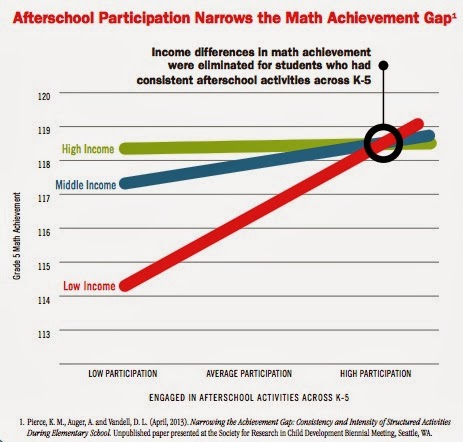
In October of last year, University of California at Irvine researcher, Deborah Vandell, released an important study on the positive effects of afterschool programs.  Her study revealed that "more consistent time spent in afterschool activities during the elementary school years is linked to narrowing the gap in math achievement, reduced school absences and improved behavioral outcomes for students."(1) 

More specifically, the math achievement gap was measured
Deborah Vandell
at grade 5. The more consistent the afterschool attendance, the narrower the gap between high-income and low-income students. Conversely, the greater the inconsistency of attendance, the wider the achievement gap. But also, those children that spent more time in afterschool programs showed:


- Better work habits
- Improved academic performance
- Gains in self-efficacy
- Improved GPA
- Increased attendance, fewer school absences

This is important information to share with program and in-school stakeholders. Click here for a colorful summary of the research.


________________________
(1) www.statewideafterschoolnetworks.net/achievement-gap-real

Wednesday, March 27, 2013

LIAS and Recent Trends in Education and OST (Part 1)


By Sam Piha


Sam Piha
There are several new trends or movements as stakeholders look to improve the quality of formal education and learning outside of the classroom. They include the topics of school reform, Common Core Standards, extended learning opportunities, program quality measurement, STEM, 21st century learning skills, and social-emotional learning (SEL). We will use the next two blog posts to briefly name and describe these important trends and on the relevance of the LIAS learning principles according to leaders in each of these movements: 


Pedro Noguera
SCHOOL REFORM: Beyond the discussions of how to change the structural elements of school, nearly everyone is talking about making learning more engaging. The LIAS learning principles serves as a clear guide on how to change our teaching methods to greatly increase the motivation and interest of young people involved in learning activities.

 “If you don't find a way to make learning matter to students then much of what the adults are trying to do in school reform, will fail.” – Pedro Noguera, NYU


COMMON CORE STANDARDS: The Common Core Standards were developed by the National Governor’s Association and the Council of Chief State School Officers. They have been adopted by 46 states, and focus on “fewer standards at a deeper level than do many of the models used in the past. The standards also emphasize higher order thinking skills; that is, they focus more on demonstrating understanding of content and analyzing written materials rather than on memorizing specific content.” Many of those working to draw a link between learning outside of the classroom point to the Habits of Mind, which focus on “knowledge, skills, and dispositions that operate in tandem with the academic content in the standards… and offer a portrait of students who, upon graduation, are prepared for college, career, and citizenship.”  


Deborah Vandell
According to Deborah Vandell, Founding Dean of the School of Education at UC Irvine, “Much of the school day is really spent in learning a set of material, so we’re going to need to get away from that.  Now part of the Common Core Standards is really pointing in this direction, of problem based learning, working in teams, a more sequential and deeper learning. I think that afterschool programs and summer learning, are about the same things, and I think we are going to be able to help schools see some new ways of learning.”


Elizabeth Devaney
“I think the LIAS principles are complementary, if not completely aligned with the Common Core. They represent the kind of teaching that will be necessary in order for students to achieve the Common Core. The main difference is that the LIAS principles really address the how of teaching and the Common Core is more focused on the what. But absolutely, teachers will need to shift their instruction to more closely match the LIAS principles in order for students to develop habits of mind and master the content standards.” - Elizabeth Devaney, Forum for Youth Investment


EXTENDED LEARNING OPPORTUNITIES (ELO): There is a growing call for schools to offer or link to extended learning opportunities for young people. For some, this movement represents lengthening the school day and increasing time on task or seat time. We join the many others who believe that we must be creative and flexible in our teaching methods in order to increase engagement and draw on community organizations and resources outside of school to fulfill any promise of ELO. 


Jennifer Davis
“A whole-school re-design, built upon a platform of expanded time, enables educators the opportunity to introduce fresh methods of teaching and learning. We are seeing many examples of hands on learning, deeper science experimentation, mastery around music and the arts across a number of expanded-time schools which align very well with the LIAS vision.” - Jennifer Davis, Co-Founder and President, The National Center on Time & Learning


Jennifer Peck
“The Learning in Afterschool & Summer effort is perfectly aligned and perfectly timed with the federal policy conversation around extended learning.  The LIAS principles and language support the very critical task of helping decision makers at all levels understand that after school programs are a place of learning, are worthy of continued and strengthened investments, and can be the foundation for new and innovative models of teaching and learning.” – Jennifer Peck, Partnership for Children and Youth

Friday, September 25, 2015

The "HOW" Versus the "WHAT"

By Sam Piha


Sam Piha
I want to comment on the distinction between "HOW KIDS LEARN" and "WHAT KIDS LEARN". The Learning in Afterschool & Summer (LIAS) learning principles are focused on how kids learn. They are based on recent research, combining brain research, the new science of learning, and what we know from practice.

The "how" is separate from "what": the "how" is absent of any content. Different programs and adults think that young people should acquire certain skills - this is "what". The "what" could be STEM, social emotional learning, character building, workforce readiness, or academic proficiency. The "how" is about how best to shape the strategies and activities to promote learning - regardless of what content or skills we are seeking to teach. The difference may be subtle and confusing to some, but it is fundamental to teaching and learning. 

Below are some quotes that may be helpful: 

  • "I think that the learning principles in after school and summer really get at the core of learning for students really starting in early childhood, going through to university." - Deborah Vandell, Department of Education, UCI
  • “The LIAS principles are all critical. These principles reflect what our own field experience and research suggest about the characteristics of effective learning environments." - Karen Pittman, Forum For Youth Investment 
  • “When you think about what it means to create an environment where a child is excited, supported, and ultimately takes ownership of their learning, LIAS hits the nail on the head. The principles resonate across communities of practice and in our fragmented policy context." - Samantha Tran, Children NOW


About Childhood Trauma

Source: Champions By Sam Piha Many of the children we serve in afterschool programs have experienced individual or collective trauma. Accord...