Showing posts with label afterschool program. Show all posts

Tuesday, May 7, 2019

Afterschool Learning that Supports Mastery

By Sam Piha
Sam Piha

Young people tell us they are most engaged when they are given opportunities to learn new skills. If young people are to learn the importance and joy of mastery, they need the opportunity to learn and practice a full sequence of skills that will allow them to become “really good at something.” 

Afterschool activities should not promote the gathering of random knowledge and skills. Rather, afterschool learning activities should be explicitly sequenced and designed to promote the layering of skills that allows participants to create a product or demonstrate mastery in a way they couldn’t do before. 

Programs often achieve this by designing activities that lead to a culminating event or product that can be viewed and celebrated by peers and family members. For older youth, many programs are depending on apprenticeship models to assist youth in achieving a sense of mastery.

Designing programs that allow young people to fully experience mastery requires a belief by the adults that young people of all ages can persist in building a complex sequence of skills, especially in areas that they have a passion for. This means allowing young people to make mistakes, to sometimes fail, and giving the support they need to persist.     

What learning that SUPPORTS MASTERY looks like:

  • Young people are learning and practicing new skills
  • Young people are learning skills that are sequenced and build on previously learned skills, leading to a greater mastery 
  • Young people are working toward culminating activities that demonstrate their mastery through a final product or presentation
  • Young people appear challenged and engaged by the activities. They appear focused and absorbed by the activity

Source: Stacey Daraio, Temescal Associates

Five things you can do right now:
1. Explore and assess: It is important that you take the time with your staff to explore and assess your alignment with this supports mastery principle. 

2. Plan for the skills and knowledge you want your participants to acquire in your program: Often when planning programs, staff people go straight to lining up activities to fill a determined stretch of time, without thinking through what the learning goals are for a project or the overall program. Instead of identifying activities, work with staff to determine what kinds of knowledge and skills you want your young people to acquire over time through their participation in your program. They might be academic skills, study skills, leadership or team skills. Now, consider what kinds of experiences and activities you can provide over time that will meet your learning agenda. Don’t feel like you have to do it alone! You can use or adapt curriculum materials to align with your participants’ interests and needs, and draw on teachers and others around you who may have more experience in planning against learning outcomes. Don’t forget to sequence the skills from easier to more difficult, and to allow the skills to build on one another.  

3. Culminating activities: Take a look at your different “clubs” and determine which clubs would allow young people to host a culminating activity where they can showcase their newfound skills and/or finished products. For instance, a club studying dance or rap could host an end-of-term performance. Those engaging in activities that featured art could host a viewing of their artwork. Having a culminating activity motivates young people to hone their skills and receive recognition for their accomplishments.  After a successful event, the positive effect on a group’s sense of community and the individuals’ experience of accomplishment can be quite profound.

4. Advanced clubs: With your staff, consider whether current clubs can be followed by advanced clubs – clubs that allow young people to continue to gain new knowledge and skills in an area that they have high interest. For instance, a video club where young people learn how to use introductory video software could be followed by an advanced club where they learn more advanced software, or moved onto learning how to create soundtracks or digital special effects. 

5. Internships: For older youth who have shown a passion in a specific area, look for community partners who would be willing to accept an intern. Internships allow young people to advance their mastery and to see how they could use their new skills in a real-life work environment. It is important that the young people as well as the businesses are prepared in advance and are very clear about the expectations. Visit other programs that have successfully introduced internships and take advantage of articles and curriculum that have been published to assist programs that are just launching internship programs.   

Below is a good program example of "supporting mastery":
Youth Institute (community-based); (Grades 8 – 10); YMCA of Greater Long Beach; Long Beach, CA   

The Summer Youth Institute is focused on the process of digital movie-making which requires pre-production, production and post production work. The Youth Institute operates 8 hours a day, Monday through Friday for eight weeks. The youth are placed in production groups and operate in a collaborative learning environment throughout the summer. These groups are very diverse with no majority - gender, ethnic/race, age, or grade level. They have had executive briefings at Apple, Pixar, Google and EA Sports and all the executives, according to Youth Institute leaders, say the same thing, "We want employees who CAN work in DIVERSE groups. If you can't work in a diverse group, you will not work here long."


Source: Youth Institute, Long Beach

Each production group in the Youth Institute creates a short film, teen magazine, website, music production and 3D printing and product design. This work teaches youth critical, sequential, spatial, and analytical thinking, along with group work and problem solving skills. The process of making a movie is also project and product-based. Digital movie-making, if done right and well, demonstrates all of the Learning in Afterschool and Summer Learning Principles. 

Tuesday, June 19, 2018

What Difference Does It Make? An Interview with Milbrey McLaughlin

By Sam Piha


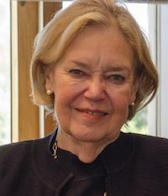
Milbrey McLaughlin
Milbrey McLaughlin has been a leading thinker, researcher, and advocate on youth development, out-of-school time youth programs, and community schools for decades. Dr. McLaughlin teaches at Stanford University’s Graduate School of Education and is Founding Director of Stanford’s John W. Gardner Center. 

Dr. McLaughlin recently released a new book entitled, You Can’t Be What You Can’t See: The Power of Opportunity to Change Young Lives. Below are her responses to a few questions regarding her work. 


Q: Can you say a few words about the subject of your new book and why you decided on this? 

A: My 1994 book Urban Sanctuaries chronicled the successful youth outcomes associated with CYCLE (Community Youth Creative Learning Experience), a neighborhood-based youth program operating in Chicago’s notorious Cabrini-Green housing project. CYCLE provided the high-poverty black youth growing up there with concrete alternatives to gangs and school failure, occasions to experience life outside the four square blocks of their dense neighborhood, and opportunities to imagine futures different from the concentrated poverty they saw around them. 


While Urban Sanctuaries documented participants’ encouraging outcomes in the early 1990s, it could say little about whether these positive attitudes and behaviors could or would be sustained over time given the powerful challenges of poverty and negatives of life in Cabrini-Green. You Can’t Be What You Can’t See: The Power of Opportunity to Change Young Lives follows up with around 700 CYCLE participants 30 years later and provides a rare opportunity to see the long-term impact of a youth program on their lives, and the lives of their children.

CYCLE had remarkable success in enabling Cabrini-Green’s low income, African-American youth to make it through high school and move into positive adult lives. In a community where around 30% African-American females and less than 20% of African-American males graduated from high school, and where gang membership and early pregnancies were the norm, CYCLE participants’ accomplishments are extraordinary. Around 90% of the youth involved in CYCLE’s scholarship programs and other activities during the 1980s graduated from high school. They subsequently achieved careers such as educators, doctors, office workers, social workers, managers, youth leaders, tradesmen and law enforcement officers. Many attained success in higher education. In addition to earned Associate’s and Bachelor’s degrees, CYCLE participants from the 1980s include 11 doctorates, 2 MDs, and MAs in programs such as architecture, social work, education, and business. 

Today, CYCLE alums have stable jobs, families and friendships; they are active in their communities and in their children’s lives. And, a majority of their children are high school graduates headed for higher education. 

Q: What were the key takeaways? 

A: There were several:

  • The impressive accomplishments of CYCLE alums and their children show that the negative outcomes predicted for kids who grow up in concentrated poverty like Cabrini-Green—school failure, early pregnancy, involvement with gangs, drugs—are not inevitable. They result not from a so-called “culture of poverty” but from a poverty of opportunities. But sadly, nationally, the youth who most need out-of-school opportunities like CYCLE in fact have the fewest. Kids, especially black youth, growing up in the most impoverished communities have scarce constructive things to do once school is out.
  • Attention to the character of the context available to high-poverty youth may be the single most important ingredient in transforming poor kids’ sense of who they are and what they might become. CYCLE’s experience counsels that the most productive approach to improving low-income youth’s social and academic outcomes involves changing the nature of their environment rather than zeroing in on “fixing” the kid. CYCLE demonstrates that a comprehensive, youth-centered, relationship-based program that exposes poor kids to new places, options and pathways, supports their academic and personal efforts unconditionally, and gives them the tools needed to reach their goals can transform the lives of even the most disadvantaged, marginalized youth.
  • This follow-up project highlights the importance of taking a ‘life-course’ or long-term perspective to understand the consequences of a youth program on participants’ lives. While near-term program outcomes such as high school graduation or postsecondary enrollment provide important markers of program effectiveness, they can say nothing about whether [or not] the positive developmental outcomes these benchmarks predict in fact occur, or are sustained. Arguably, the intergenerational consequences associated with CYCLE participation—what happens to their kids— may provide the ultimate gauge of sustained effects.

Photo Credit: www.chicagoganghistory.com

Q: Were there any findings that you were surprised by? 

A: Interviews, alums’ personal friendship networks and social media provided information about the lives of more than 700 CYCLE alums. Although I expected to hear many reports of alums’ rewarding personal and professional lives, I found the extent of these positive life accounts stunning. All but a handful of CYCLE participants enjoy productive middle class lives today, and former participants credit CYCLE for this success. CYCLE represents an extraordinary return on investment!


Q: Several years ago, you led qualitative research on the San Francisco Beacons. To conduct this research, you hired youth ethnographers. This was very unusual at the time. Why did you choose to conduct research in this way and what were the benefits? 

A: It seemed to me that youth would be especially perceptive observers of Beacon activities and contexts, as well as effective interviewers of youth about their Beacon experiences--better in many instances than Stanford researchers and graduate students! Stanford researchers interviewed youth and staff, observed, and reviewed record data as part of the Beacons research. The youth ethnographers’ reports and perceptions brought important ‘validity’ and insight to our work. In several instances youth ethnographers pointed out features of program settings we did not see or fully understand—particularly around staff/youth interactions. For instance, youth ethnographers considered the Beacon center that the quantitative [survey] research deemed ‘best’ not all that attractive. They preferred the Beacon center that quantitative research deemed disorganized; it was their choice because they found it welcoming and supportive in ways the other more by-the-schedule Beacon was not.

Q: In 1994, you wrote a book entitled Urban Sanctuaries, in which you describe how urban leaders create and sustain youth programs in spite of enormous challenges. Based on what you've seen and learned since then, have any of your views changed or been altered? 

A: When we began the research that led to Urban Sanctuaries in the mid-1980s, the term “positive youth development” was not widely in use among youth practitioners, if at all. Greg Darnieder, CYCLE’s founder, certainly had never heard of it! Thirty years ago, successful out-of-school programs like CYCLE generally were the work of committed, passionate individuals like Greg. Little organized support existed to foster systems or networks dedicated to providing or expanding youth development opportunities. The advice offered in Urban Sanctuaries to create more CYCLES was “go find a wizard!”  Today, however, many more resources are available to promote and enable effective OST programs. This encouraging development changes my recommendation about how to enable more effective youth programs from ‘go find a wizard,’ to advocacy for efforts that coordinate youth-focused funding streams and resources within and across local, state and federal policy systems, and so provide productive system contexts for those wizards and the youth they serve.

---------------

Milbrey McLaughlin, Ed.D. is the David Jacks Professor of Education and Public Policy, Emerita, at Stanford University and the Founding Director of the John W. Gardner Center for Youth and Communities. She also is Co‑Director of the Center for Research on the Context of Teaching, an interdisciplinary research center engaged in analyses of how teaching and learning are shaped by teachers’ organizational, institutional, and social‑cultural contexts.

McLaughlin has focused throughout her career on the various institutional contexts and policies that shape youth outcomes—schools and community-based institutions most particularly. The Gardner Center embodies McLaughlin’s interest in identifying and understanding the cross-institutional issues that shape with settings within and through which youth move, and in advancing a youth sector stance to inform policy and practice.

About Childhood Trauma

Source: Champions By Sam Piha Many of the children we serve in afterschool programs have experienced individual or collective trauma. Accord...